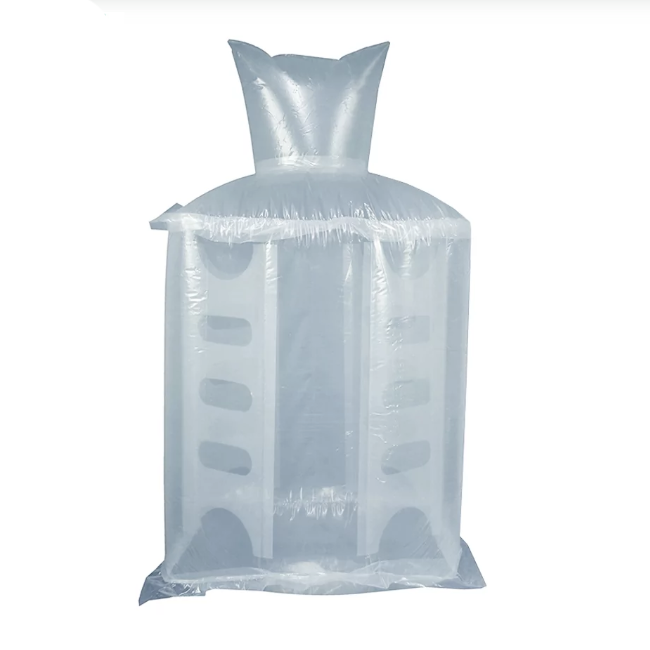
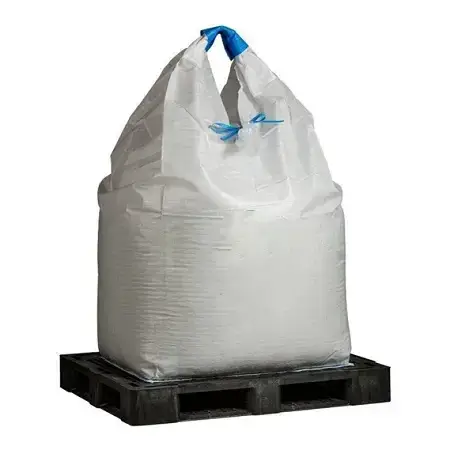
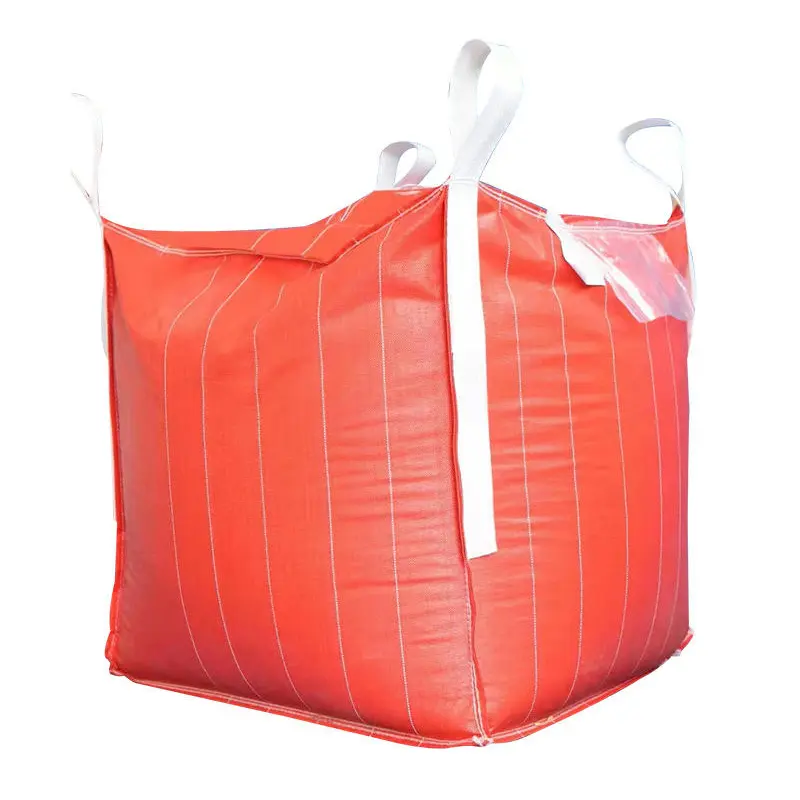
A 1 ton bag of cement should be specified from the cement and the filling/discharge process, not from the 1000 kg number alone. The target mass must be combined with actual bulk density to determine the required bag volume, then matched to the filling head, powder-containment requirement, lifting system and unloading method. ZhengYi FIBCs’ current top-spout/bottom-spout FIBC is available in 500–3000 kg configurations with 1000 kg as a common capacity, a 5:1 safety factor or customized basis, four lifting-loop options, coated or uncoated PP fabric, optional PE liner and optional sift-proof or dust-proof treatment. These options still need to be frozen into one cement-specific RFQ before quotations are comparable.
Why Cement 1 Ton Bags Need More Than a 1000kg Rating
The phrase cement 1 ton bags gives a supplier a target mass, but it does not define how much internal volume the cement occupies or how the FIBC must interact with the filling line.
The required volume depends on the actual bulk density of the cement being packed. A buyer should provide the project value where it is known rather than asking the supplier to use a generic assumption. The relationship is simple:
target net mass ÷ actual bulk density = approximate product volume before filling-process allowances.
That volume then has to fit the selected bag dimensions and the way the cement settles during filling. The same nominal 1000 kg rating can therefore correspond to different dimensions in different projects.
This is also why a cement ton bag should not be copied from another material simply because both projects use one tonne. The packed product controls the volume and containment problem.
How Should a Cement Jumbo Bag Interface With the Filling Line?
ZhengYi FIBCs’ verified Top Spout Bottom Spout Jumbo Bag uses a filling spout at the top. For a cement jumbo bag, that interface should be defined from the buyer’s filling equipment rather than from a standard spout name.
The RFQ should identify:
- the filling-head or chute interface;
- the required connection method;
- the target filling rate if it affects bag stabilization or air displacement;
- whether the filling station includes dust extraction;
- how the top spout is closed after filling.
The verified product description notes that the filling spout is designed for loading through filling equipment with reduced dust and product loss compared with uncontrolled open filling. That does not mean every cement installation will automatically achieve a dust target. The buyer still needs to define the plant’s dust-control system and the interface the bag must match.
Bulk Bag Cement Packaging Needs a Defined Powder-Containment Strategy
Searches for bulk bag cement often collapse several construction choices into one phrase. In procurement, coated fabric, sift-proof construction and a PE liner should be treated as separate variables because they control different parts of the package.
Coated or uncoated PP fabric
The target ZhengYi FIBCs product allows coated or uncoated woven polypropylene. Coating changes the fabric construction and can be part of a powder-containment strategy, but it does not by itself define seam leakage or liner performance.
Sift-proof or dust-proof treatment
The same product lists sift-proof and dust-proof treatment as optional. If the project needs these options, the buyer should state the acceptance goal and ask the supplier to define the offered construction. A phrase such as “dust-proof bag” is too vague unless the quotation makes clear what treatment is included.
PE liner
An optional PE liner provides another internal barrier. It can be considered where additional product containment or moisture protection is required, but the buyer should also confirm how the liner is fixed, how it behaves during filling, and how it interacts with the discharge spout.
Important distinction: coated fabric, sift-control details and a PE liner are not the same feature and should not be treated as automatic substitutes for one another.
When Does a 1 Ton Bag of Cement Need a PE Liner?
A liner decision should be tied to the storage and product-protection requirement. A buyer sourcing a 1000kg cement bulk bag should ask whether the packed cement needs additional protection from moisture or product migration beyond the outer woven FIBC construction.
If a liner is required, the RFQ should define:
- whether the liner is loose, fixed or otherwise integrated;
- how it connects to the top filling area;
- how it behaves at the discharge outlet;
- whether the liner is part of the approved finished-bag sample;
- what barrier performance the buyer actually needs verified.
Do not add a liner simply to make the quotation look more complete. An unnecessary liner can complicate filling or discharge if its connection and movement are not controlled.
Controlled Discharge Should Be Designed From the Receiving Equipment
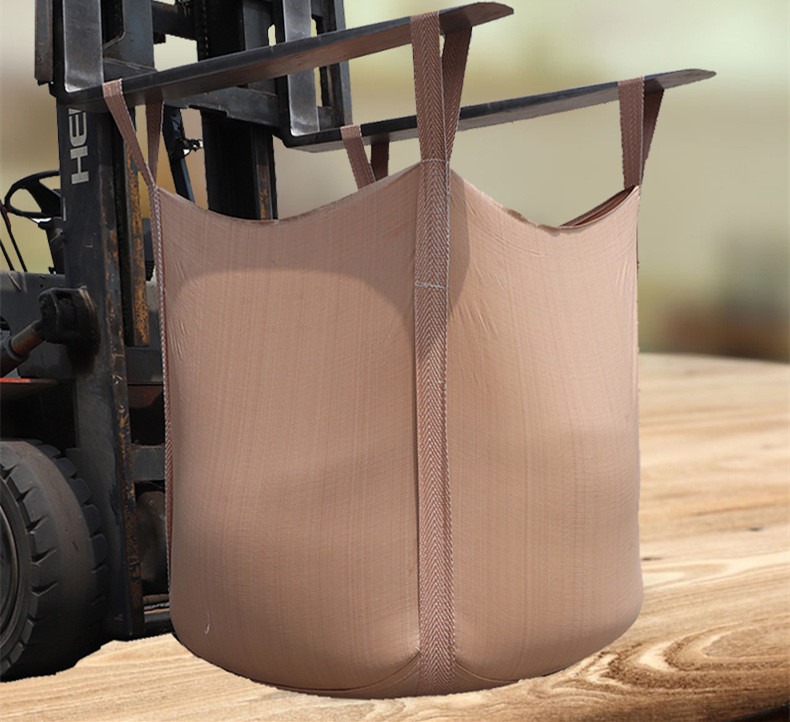
The verified cement-suitable product uses a bottom discharge spout. That configuration is valuable only when the outlet matches the downstream unloading process.
For a 1 ton FIBC bag for cement, the buyer should describe:
- whether the bag empties into a hopper, silo feed system or another receiver;
- the receiving opening or connection requirement;
- whether flow must be stopped and restarted;
- the closure method required after partial discharge, if partial discharge is part of the process;
- whether the liner, if used, needs its own discharge connection.
A generic “bottom spout” can still be wrong if its dimensions or closure do not fit the receiving equipment. The discharge interface should therefore be returned by the supplier as a measurable part of the quotation.
Which Lifting Arrangement Fits a 1000kg Cement Project?
The target top-spout/bottom-spout bag uses four lifting loops and can be offered with corner-loop or cross-corner-loop arrangements according to the product information. A separate ZhengYi FIBCs two-loop product family also includes cement among its documented applications, with 1000 kg listed as a common capacity.
This does not mean the loop structure should be chosen only by cost. The buyer should start with the equipment:
- forklift fork arrangement;
- crane or hook system;
- filling-station suspension method;
- clearance around the filled bag;
- internal transport and storage process.
If the facility already has a fixed four-point filling or lifting frame, a four-loop design may be the natural interface. If the project uses a simpler single- or two-point pickup process, another FIBC family may be more appropriate. The supplier should confirm compatibility against the actual equipment.
SWL and Safety Factor Must Be Kept Separate
ZhengYi FIBCs lists 1000 kg as a common capacity for the top-spout/bottom-spout bag and a 5:1 safety factor or customized basis. A separate two-loop 1000 kg product lists 5:1, 6:1 or customized options.
These numbers serve different purposes. The required safe working load defines the permitted working payload for the ordered bag. The safety factor describes the testing/design relationship used for the relevant service classification; it is not extra payload available for routine use.
A purchasing team should therefore ask the supplier to state:
- the offered SWL;
- the offered safety factor;
- the intended service basis for that configuration;
- the relevant test or specification evidence required by the project.
This avoids the common mistake of treating a higher safety-factor number as permission to exceed the stated working load.
How to Compare Two 1 Ton Cement Bag Quotations
Two suppliers can both quote “1 ton bag of cement packaging” and still be pricing materially different products. Before comparing unit price, normalize the technical scope.
| Quotation Item | What Must Be Comparable |
| Target mass / SWL | Same working-load requirement |
| Bulk density / volume | Same cement input and required bag volume |
| Bag dimensions | Same dimensional basis or approved equivalent |
| Top spout | Same filling-equipment interface |
| Bottom spout | Same receiving / discharge interface |
| Fabric | Coated or uncoated as specified |
| Sift / dust treatment | Same containment requirement |
| PE liner | Same liner scope and connection method |
| Lifting loops | Same handling-system interface |
| Safety factor | Same required service/testing basis |
| Printing / labels | Same identification scope |
| Packing / quantity | Same commercial quotation basis |
Only after these variables are aligned does a price comparison become meaningful. A cheaper bag with a different liner, loop arrangement or discharge construction is not automatically a lower price for the same product.
What Evidence Should Buyers Ask For?
For cement packaging, the supplier response should make the final construction traceable before production. Depending on the project, useful evidence can include:
- a dimensioned bag drawing;
- confirmed SWL and safety-factor basis;
- fabric, coating and liner description;
- top- and bottom-spout dimensions;
- loop arrangement;
- sample approval where filling/discharge fit is critical;
- test or inspection documentation required by the purchase specification;
- a deviation list identifying anything different from the RFQ.
The evidence should prove the variables that matter to the buyer’s process. A certificate or general product sheet cannot compensate for a spout that does not fit the filling head or a discharge outlet that does not match the receiving hopper.
Build a Cement-Specific RFQ, Not a Generic One-Ton Bag Request
A useful RFQ for cement super sacks or other one-ton cement FIBCs should state:
- cement type / packed material description;
- target net weight, such as 1000 kg;
- actual bulk density where known;
- required bag dimensions or site constraints;
- filling equipment and top-spout interface;
- discharge equipment and bottom-spout interface;
- coated or uncoated fabric requirement;
- sift-proof or dust-control requirement;
- PE liner requirement and connection;
- lifting equipment / loop arrangement;
- required SWL and safety factor;
- printing and label requirements;
- order quantity and packing;
- required approval documents or samples.
ZhengYi FIBCs’ FIBC Bulk Bags category provides the broader product family, while the Top Spout Bottom Spout Jumbo Bag with 4-Point Lift Handling is directly documented for cement and includes 1000 kg among its common capacities.
Send the cement data, filling/discharge interfaces, handling method and containment requirements through the Contact / RFQ page. The goal is to receive one controlled, cement-specific FIBC specification from each supplier so that technical scope is aligned before the commercial comparison begins.