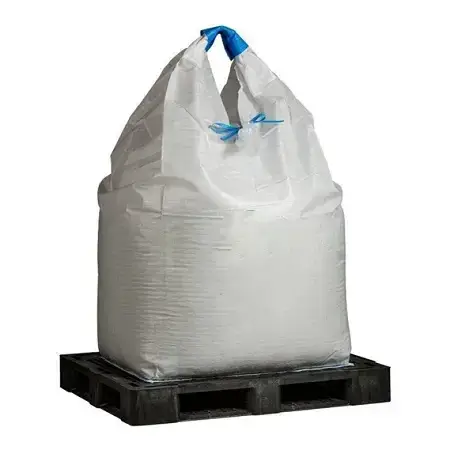
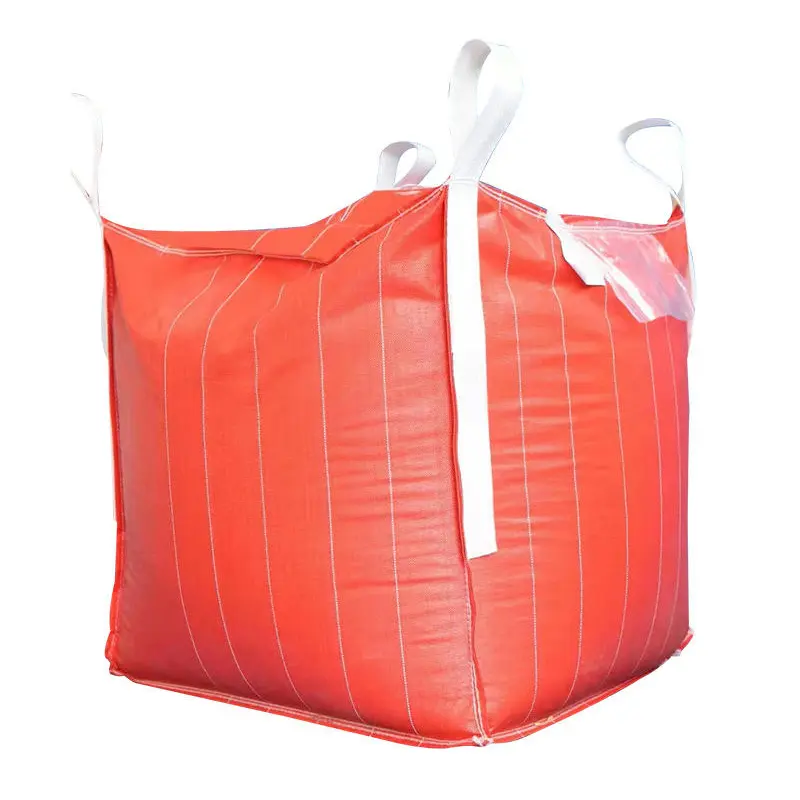
Buyers comparing 1 2 loop big bags should start with the lifting and handling interface, not with loop count alone. A one-loop or two-loop FIBC can be produced for a wide range of dry bulk materials, but the right design depends on how the bag is filled, picked up, transferred, stored and discharged. ZhengYi FIBCs currently lists 1 & 2 Loop Big Bags in circular woven polypropylene with 400–3000 kg load capacities, 400–2000 L volumes, one- or two-loop options, multiple top and bottom constructions, optional PE liners and coated or uncoated fabric. Those options only become a usable specification when they are matched to the buyer’s actual equipment and material.
One Loop vs Two Loop Big Bag: Start With the Pickup Interface
The practical difference between a one-loop and two-loop design is not simply the number of lifting points. The loop arrangement changes how the FIBC presents itself to the handling equipment and how the bag must be positioned before pickup.
For single loop FIBC bags, the buyer should confirm how the main lifting point will be captured by the forklift, crane hook or automated handling device. If the plant uses a fixed pickup position, the loop geometry and accessible lifting area need to be compatible with that interface.
With a two-loop construction, the handling system must engage two lifting points consistently. That creates another set of questions: how the lifting points are spaced, whether the pickup equipment keeps the bag balanced, and whether operators can engage the loops without excessive repositioning.
Decision rule: do not specify “one loop” or “two loops” first. Define the lifting equipment, pickup geometry and handling sequence first, then select the loop construction that can be verified against that system.
Which Handling Equipment Will Lift the Bag?
A useful RFQ should describe the real lifting device. The product description for ZhengYi FIBCs’ 1 & 2 Loop Big Bags positions the reinforced upper lifting structure for forklift, crane and automatic handling applications, but the supplier still needs the project interface before confirming the final bag.
Forklift handling
If a forklift is used, provide the relevant fork arrangement and explain how the operator approaches the bag. A plant that handles bags from a fixed pallet position may need a different loop-access arrangement from a yard operation where the forklift can approach freely from several directions.
The RFQ should clarify whether the forks directly engage the lifting loop or whether an attachment, hook or lifting frame is used. This matters because the loop must be accessible in the actual operating sequence, not only in a catalogue photo.
Crane or hook lifting
For hook lifting, identify whether the operation uses one pickup point or a spread arrangement. The interface between hook and loop should be confirmed so that the offered construction can be handled without forcing, twisting or improvised rigging.
Automatic handling
Automated systems need repeatable pickup geometry. If loop position is critical to a filling station or conveyorized process, include the required presentation and pickup conditions in the technical brief. “Compatible with automatic handling” should be treated as something to verify against the equipment, not as a universal feature that applies to every system.
Load Capacity Does Not Decide the Loop Type by Itself
ZhengYi FIBCs lists the 1 & 2 Loop Big Bag range at 400–3000 kg load capacity, with customization available. That wide range illustrates an important point: payload and loop configuration are separate decisions.
A buyer may search for a two loop bulk container bag 1000kg, but “1000 kg” tells the supplier only the target mass class. It does not define the material volume, filling method, lifting interface or discharge requirement.
Two 1000 kg projects can require different bags because the packed products may have different bulk densities and flow behavior. A dense mineral may reach the target mass in a smaller volume than a low-density agricultural product. The selected bag therefore has to satisfy both mass and volume requirements.
The engineering relationship is:
target net mass + actual bulk density → required fill volume → bag geometry → lifting and handling interface.
That is why buyers should not copy a nominal capacity from a previous project without checking the packed material.
Top Design Must Match the Filling Process
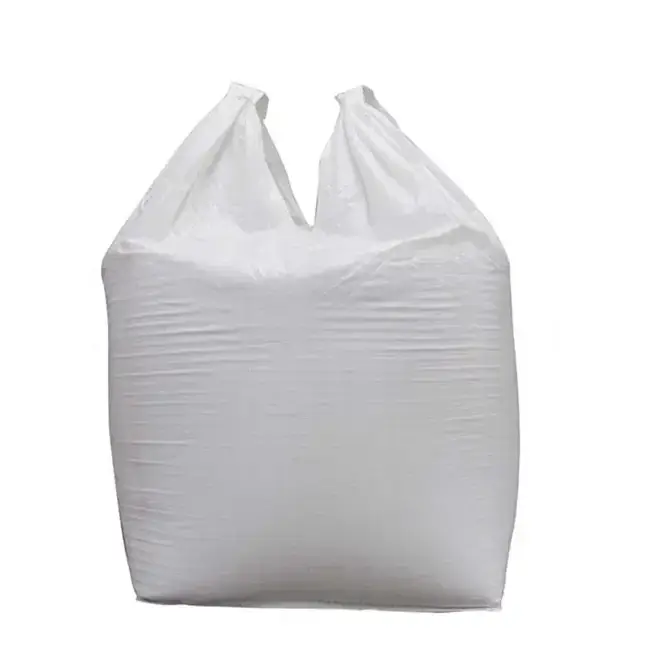
The verified 1 & 2 Loop Big Bag range includes open top, filling spout and skirt-top configurations. Each one changes the way material enters the bag and the way the top is closed.
Open top
An open top provides a large filling opening. It can suit projects where the filling process does not require a dedicated spout connection and where the closing method is defined separately.
Filling spout
A filling spout is more relevant when the bag needs to connect to controlled filling equipment. Buyers sourcing a 2 loop FIBC bulk bag for powders or granules should provide the filling-head interface rather than asking for a generic “spout top.” The spout diameter, usable engagement and closure method are project variables and should be confirmed before production.
Skirt top
A skirt or duffle-style opening provides a wider access area while still allowing the top to be gathered or closed. It may be useful where large filling access is needed but a fully open top is not acceptable.
The correct choice is driven by the filling equipment and material, not by loop count. A one-loop bag and a two-loop bag can both require different top constructions depending on the process.
Flat Bottom or Discharge Spout?
The bottom design should be selected from the downstream emptying process. ZhengYi FIBCs lists flat bottom, discharge spout and customized bottom options for the 1 & 2 Loop Big Bag range.
A flat-bottom bag may fit projects where controlled outlet discharge is not required. A discharge spout becomes more relevant when the bag must connect to a hopper or receiving process and the buyer needs more controlled emptying.
For a two lifting loops FIBC big bag with flat bottom, the RFQ should still state how the material will be removed from the bag. “Flat bottom” is a construction description, not an unloading procedure. The purchasing team should confirm whether the bag will be opened, cut, tipped or handled through another approved process.
When Does a PE Liner or Coated Fabric Belong in the Specification?
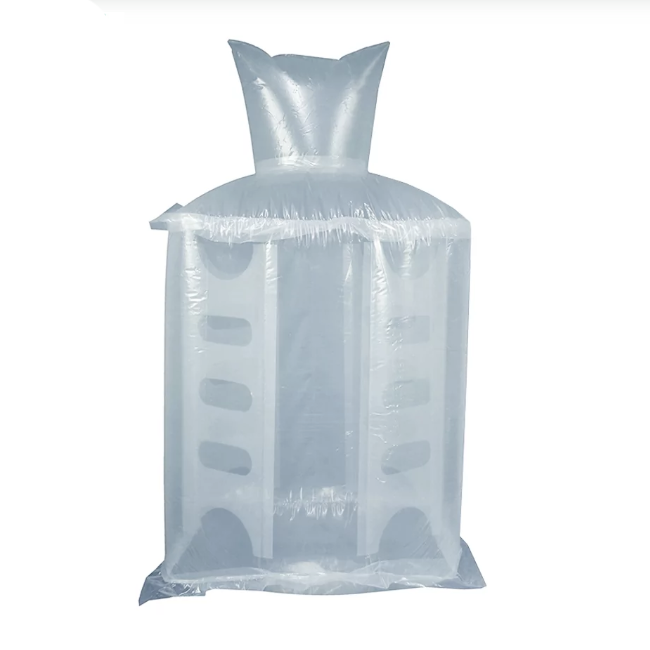
The verified product range allows coated or uncoated PP fabric and an optional PE inner liner. These features should be linked to a defined material-protection requirement.
A liner may be considered when the packed product needs an additional internal barrier for moisture, dust migration or contamination control. Coated fabric changes the outer woven fabric construction and may be part of a sift-control or protection strategy. Neither option should be added automatically simply because the material is a powder.
The buyer should describe the actual concern:
- moisture exposure during storage or transport;
- fine product migrating through woven fabric or seams;
- contamination sensitivity;
- need for cleaner filling or discharge;
- compatibility with the packed product.
Then the supplier can propose the construction and state what the liner or coating is intended to accomplish.
How Should Buyers Compare One-Loop and Two-Loop Quotations?
Quotations should be normalized around the handling process. Otherwise, a lower-priced single-loop bag may be compared with a two-loop bag that was designed for a different pickup system or a different top/bottom configuration.
| RFQ Variable | Buyer Should Define | Supplier Should Return |
| Packed material | Powder, granule or other dry bulk product | Proposed bag construction |
| Target load | Required net mass / SWL basis | Offered load rating |
| Bulk density | Actual project value where available | Required volume / dimension proposal |
| Lifting system | Forklift, crane, hook or automated handling | One-loop or two-loop construction and interface |
| Top | Filling method and equipment interface | Open, spout, skirt or approved alternative |
| Bottom | Discharge process | Flat, discharge spout or approved alternative |
| Fabric | Protection and product-containment requirement | Coated / uncoated construction |
| Liner | Barrier requirement if any | PE liner inclusion and construction |
| Quantity | Order quantity / project schedule | Commercial quotation basis |
What Evidence Should Be Approved Before Production?
A loop configuration should not be approved only because the sample can be lifted once. The buyer needs evidence that the final specification represents the complete handling cycle.
Useful approval evidence can include:
- a dimensional drawing showing the bag and lifting-loop arrangement;
- confirmed SWL and safety-factor basis for the ordered configuration;
- top and bottom construction details;
- liner or coating scope where required;
- a sample or trial bag where the handling interface is critical;
- a written deviation list if the offered construction differs from the RFQ.
For repeat orders, retain the approved specification revision and supplier part reference so that “same bag as last time” does not replace measurable controls.
Build the RFQ Around the Handling System
Buyers searching for fibc one loop big bag, single loop FIBC bags or two-loop designs are often trying to solve the same underlying problem: how to move bulk material through the plant with the fewest handling conflicts.
ZhengYi FIBCs’ Two Loop Big Bag category provides the product-family starting point, while the 2 Loop PP Woven FIBC Jumbo Bag for Bulk Materials page documents the available one-/two-loop, top, bottom, liner and fabric options.
For a project quotation, send the packed material, target load, bulk density, filling process, lifting equipment, discharge method and protection requirements through ZhengYi FIBCs’ Contact / RFQ page. The objective is to make the loop design fit the handling system—not to make the handling system adapt to an undefined bag.