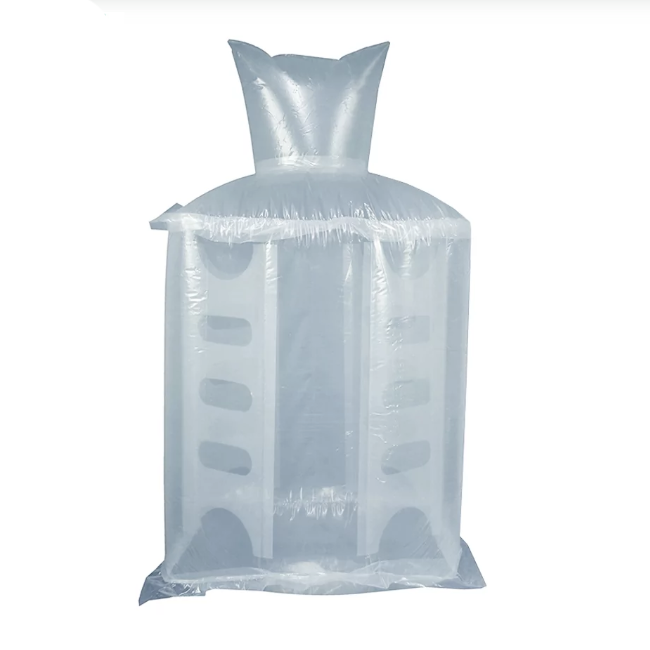
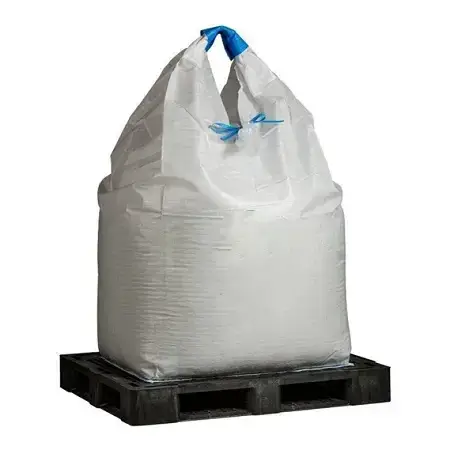
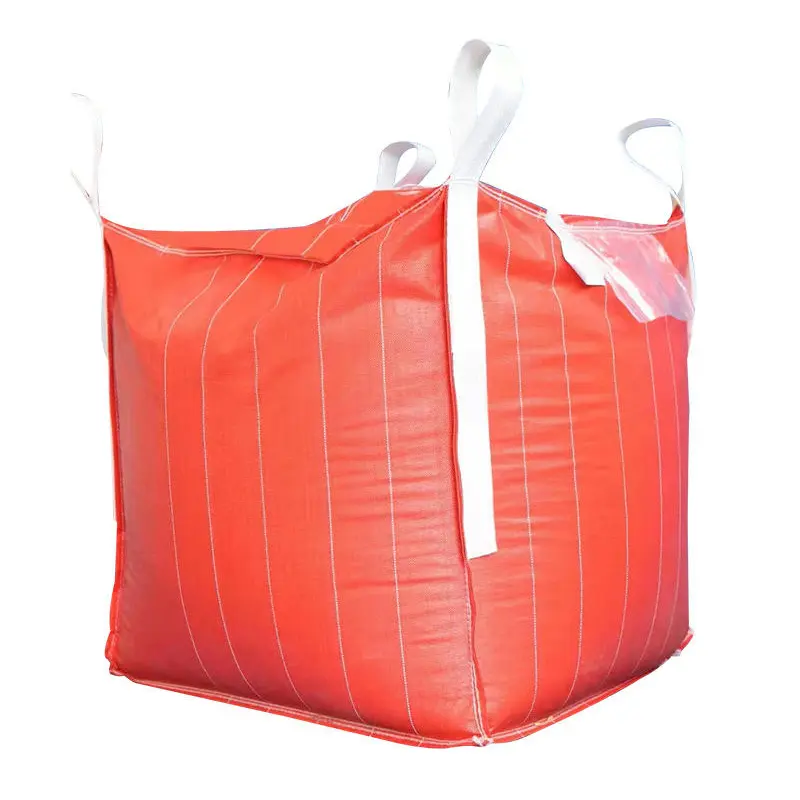
Read FIBC bulk bag dimensions by identifying the bag body length, width and height, confirming the units and measurement points, and recording the lifting loops and filling and discharge spouts separately. For bag body dimensions, also confirm the internal or external basis and whether the bag is measured empty or under defined filling conditions.
For buyers comparing FIBC bulk bag sizes, these details answer three practical questions: what will be manufactured, how it will connect to equipment, and how much space it will occupy in use. ZhengYi FIBCs offers custom dimensions and loop heights for its woven polypropylene spout bags. A dimensioned drawing gives the buyer and supplier one basis for confirming those requirements.
Read the Bag Body Size: Length, Width and Height
A bag body specification starts with length × width × height, followed by a unit such as millimetres or inches. Label the two base directions on the drawing and keep that orientation throughout the quotation, sample inspection and order. This matters when the base is rectangular or an equipment connection fixes the bag’s position.
Bag body height is measured between the upper and lower body seams. Record the projecting loops and spouts as separate components. A quotation that gives only “height” leaves room for different interpretations about where the measurement starts and ends.
If a specification uses both metric and imperial units, identify the controlling unit and treat the other as a conversion. Otherwise, rounding can create two slightly different acceptance limits.
A load description such as “1,000 kg bag” does not define length, width or height. When browsing the FIBC bulk bag range, compare the dimensional information separately from the load rating.
Distinguish Internal, External and Lay-Flat Measurements
Internal vs External Dimensions
Internal dimensions and external dimensions describe different measurement boundaries. A supplier may specify internal measurements between defined inside seam or hem lines, while external measurements use the defined outer edges. The drawing should show the exact points used for each dimension.
Two quotations displaying the same numbers are therefore not necessarily specifying the same finished bag. Before comparing them, check the component, boundary, measurement condition and tolerance:
| Detail | Question to resolve |
| Component | Does the number describe the bag body, a lifting loop or a spout? |
| Boundary | Which seam lines, edges or attachment points define the measurement? |
| Condition | Is the bag empty and positioned as specified, or filled under stated conditions? |
| Tolerance | What variation is permitted when using the agreed measurement method? |
Internal versus external describes where a measurement is taken; empty versus filled describes the bag’s condition during measurement. An external width measured on an empty bag does not establish the width of the filled bag on a pallet.
When measuring a sample, photograph the measurement points and record how the fabric is positioned. Compare samples using the same method. Avoid applying a fixed allowance to convert every internal size into an external size: seam construction and the selected measurement points must be accounted for.
Lay-Flat Width vs Spout Diameter
Lay-flat width is the edge-to-edge width of tubular material flattened into two layers. Spout diameter is measured across the circular opening. Label the quantity explicitly whenever a quotation refers to “spout width.”
For an ideal circular tube, ignoring seam allowances, fabric thickness and stretch, the flattened width is approximately half the circumference. The geometric relationship is:
Diameter ≈ 2 × lay-flat width ÷ π
As an illustrative calculation, a 500 mm lay-flat width corresponds to an ideal circular diameter of about 318 mm. This is a geometry example, not a ZhengYi product specification. Actual spout fit still depends on the finished opening, seams and equipment connection.
Use this relationship only for the tube being measured. It cannot convert the width of a folded bag body into the outside diameter of a filled FIBC.
List Loop and Spout Dimensions Separately
Bag Body Height and Loop Height
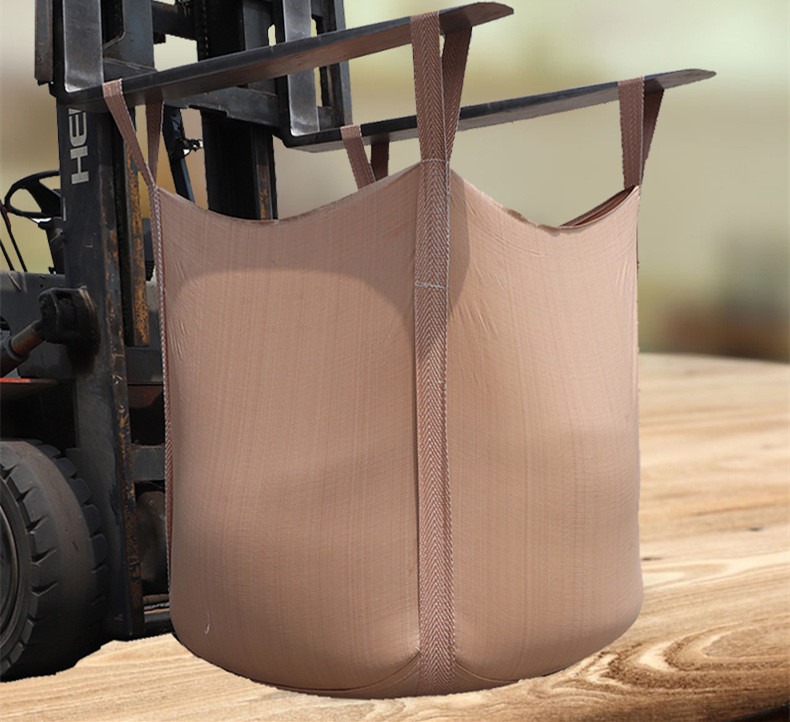
Loop height is measured from the top of the bag to the loop’s apex with the bag laid flat. It describes the loop’s projection above the body, rather than the total length of webbing used to make and attach it.
For equipment checks, identify which loop dimension the handling system requires and record the attachment arrangement. Two bags with the same body height can present different interfaces if their loop heights or positions differ.
Adding body height and laid-flat loop height does not, by itself, establish the operating headroom. That check must include the actual lifting arrangement, the filled bag’s shape and the clearance needed at the filling or discharge station.
Filling and Discharge Spout Dimensions
Specify each spout with an opening dimension and a length. State whether the opening dimension is a diameter or a lay-flat width. Measure the spout length from its attachment to the bag’s top or bottom fabric to its free end.
ZhengYi FIBCs’ top-spout and bottom-spout FIBC bags combine a filling inlet, a discharge outlet and four lifting loops. Give the inlet and outlet separate dimensions on the drawing. Matching bag body sizes do not establish that the spouts will fit their respective filling and discharge connections.
Check the filling spout against the filling head and its connection method. Check the discharge spout against the receiving inlet, the required reach and the closure arrangement. If a liner is included, identify whether the quoted measurement refers to the outer fabric spout, the liner opening or both. Keep these interfaces distinct in the FIBC bulk bag specifications.
Check What Changes When the Bag Is Filled
Dimensions, Usable Volume and Rated Load
Dimensions describe size, usable volume describes the space available for material, and safe working load (SWL) describes the load the bag is designed to carry. Each answers a different question.
Start a material-volume estimate with the target fill mass and the bulk density under relevant filling conditions:
Estimated material volume (m³) = fill mass (kg) ÷ bulk density (kg/m³)
For example, a hypothetical 1,000 kg fill at a bulk density of 800 kg/m³ occupies approximately 1.25 m³. This estimate does not specify a bag size or approve a load rating. It identifies the material volume that the proposed configuration must accommodate.
Multiplying nominal length, width and height gives the volume of the corresponding rectangular box. A flexible bag can change shape during filling, and its closure, liner and usable fill level also affect the available space. Confirm usable capacity for the proposed configuration instead of treating the box calculation as a finished-bag capacity test.
Use the bulk density that represents the material’s actual condition. A loose-fill value and a settled value can lead to different volume estimates. The selected bag must meet both the volume requirement and the separately specified SWL.
Empty Dimensions and Filled Clearance
Use empty-bag measurements to check the agreed construction dimensions. Use measurements of the filled bag under relevant conditions to check the space it occupies. Neither record replaces the other.
Match the measurement to the decision | Decision | Information to use | Conditions to record |
| Confirm the supplied bag size | Body and component dimensions | Drawing revision, measurement points, empty-bag positioning and agreed tolerances |
| Check material capacity | Required material volume and usable capacity of the proposed bag | Material, bulk density, fill mass, liner and filling method |
| Check equipment or pallet clearance | Actual filled outside dimensions and relevant component positions | Fill mass, settling condition, support or lifting arrangement, and available space |
For a clearance check, distinguish the maximum permitted occupied space from the target manufacturing dimensions. If a filled bag must stay within an equipment opening, an empty-bag external width alone is insufficient evidence of fit. Record the filled outside width, length and height for the relevant configuration and compare them with the actual space available.
ZhengYi FIBCs’ custom-size PP bulk bags are listed with alternative top, bottom and loop arrangements. Keep the chosen configuration attached to the filled measurement record, together with the material and filling conditions. A measurement from one configuration should not be used to predict another configuration’s footprint without checking it.
Confirm the Dimensions on the Approved Drawing
Before ordering custom FIBC bulk bags, put the dimensional requirements into one drawing or specification revision. A practical review should include:
- Product reference: the bag configuration and any sample identifier used for comparison.
- Body size: length, width and height, with the controlling unit and orientation shown.
- Measurement boundaries: the start and end points, including the internal or external basis.
- Measurement condition: how the empty bag is positioned, or the conditions attached to a filled measurement.
- Lifting loops: the required loop height, measurement points and attachment arrangement.
- Filling and discharge spouts: separate opening dimensions and lengths, with diameter or lay-flat width identified.
- Relevant liner dimensions: where a liner must connect to the filling or discharge equipment.
- Dimensional tolerances: the permitted variation for each controlled dimension and its measurement method.
- Space limits: equipment, pallet or storage restrictions, clearly distinguished from bag manufacturing dimensions.
- Document control: the drawing number, revision and confirmation date used for the order.
Agree bulk bag dimensional tolerances for the specified product. A published tolerance from another supplier does not define acceptance for your order. Where fit is sensitive, review the allowable bag variation together with the equipment dimensions and the required operating clearance.
If a sample measurement differs from the quotation, first compare the unit, orientation, measurement boundaries and bag condition. This helps separate a genuine size discrepancy from two different ways of measuring the same component.
A clear FIBC size specification identifies the component, measurement basis and condition behind every number. To discuss your FIBC dimensions with ZhengYi FIBCs, provide the current drawing or labelled sample photos, material and target fill mass, equipment size limits, and required quantity. These details give the discussion a defined starting point for confirming the body, loop and spout dimensions.