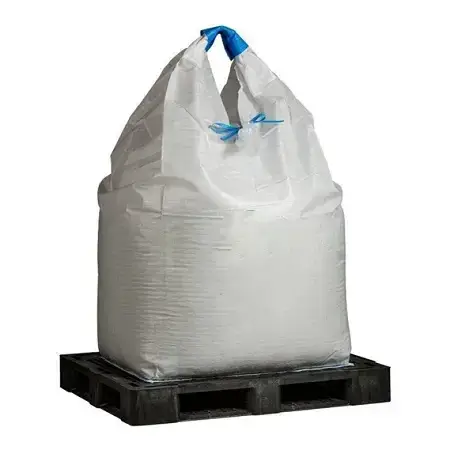
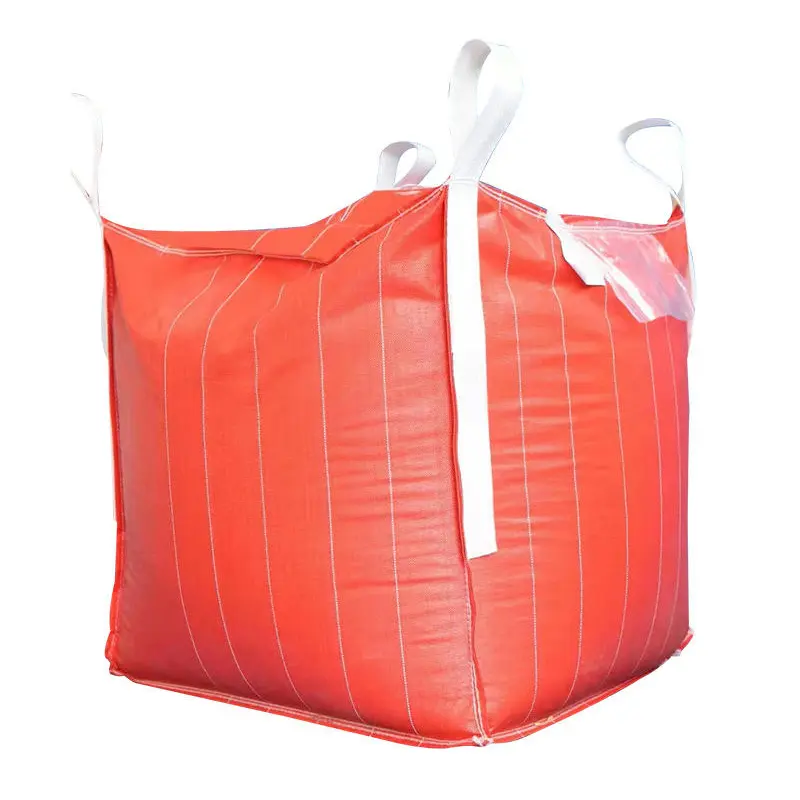
Direct answer:A 1 ton bag of sand price can refer to the empty FIBC, a PE-lined FIBC, or sand supplied inside the bag. These are different quotation scopes. For packaging comparison, buyers must align bag dimensions, safe working load, safety factor, fabric, loop design, filling and discharge construction, liner specification, printing, testing, packing, order quantity, Incoterm, and delivery destination.
What does “1 ton bag of sand price” include?
The phrase is commercially ambiguous. A construction-material buyer may mean the delivered price of one tonne of sand in a bulk bag. A packaging distributor may mean the price of an empty one-ton FIBC intended for sand. Another buyer may be asking only for the inner liner. These quotations cannot be compared until the supply boundary is stated.
ZhengYi FIBCs supplies packaging rather than the sand commodity. The relevant target item is a form-fit PE liner for a 1-ton FIBC. Its purpose is to fit inside the outer jumbo bag and provide an additional barrier for powders, granules, and other bulk materials. A liner-only quotation should not be compared with a quotation for a complete lined FIBC or a filled, delivered bag of sand.
Define one of three RFQ scopes
- Liner only: the buyer already has an approved outer FIBC and needs a compatible PE liner.
- Complete empty package: the supplier provides the outer FIBC, liner, printing, and specified accessories.
- Filled material: the quotation includes sand, filling, packaging, handling, and delivery; this normally belongs with the material supplier.
Ask every bidder to state inclusions and exclusions on the first page of the offer. The unit description should say whether the quoted unit is one liner, one empty FIBC, one complete lined set, or one tonne of filled product.
How does the PE liner specification affect cost?
A PE liner is not defined by the words “plastic inner bag.” The quotation should identify material, dimensions, film thickness or mass basis, construction, color or transparency where relevant, top and bottom shape, seam arrangement, closure, and any required barrier or antistatic property. Buyers should request values from the supplier’s proposed datasheet rather than assume one standard liner.
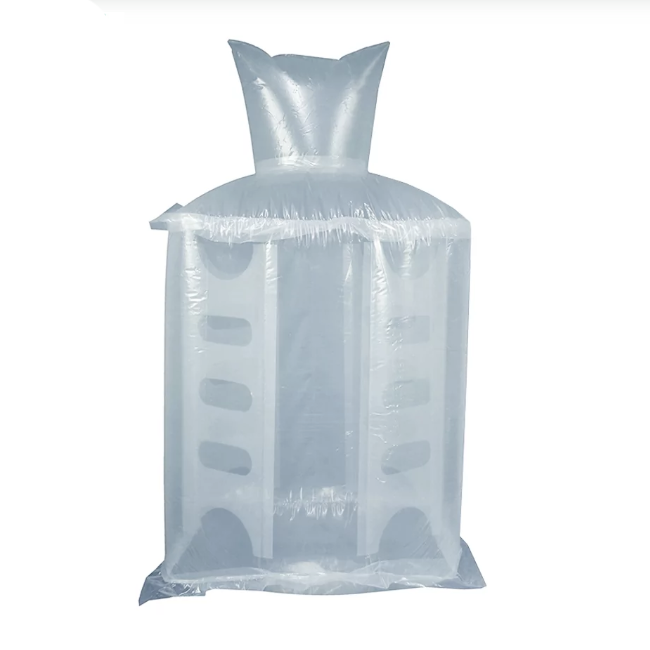
More film, additional forming operations, shaped spouts, special seams, and tighter dimensional tolerances can change material use and production time. A form-fit liner typically follows the outer bag shape more closely than a loose tubular liner. That can reduce folds and dead corners, but it requires the supplier to work from accurate FIBC dimensions and inlet or outlet geometry.
The wider big bag liner range includes different constructions for different duties. Cost comparison is meaningful only when each bidder uses the same specification. If one supplier quotes a loose liner and another quotes a formed liner with filling and discharge features, the price difference reflects scope as well as supplier margin.
Why does form fit change the RFQ?
“For a 1-ton bag” does not define the liner dimensions. FIBCs with the same nominal load can have different base sizes, heights, top constructions, discharge designs, and seam profiles. A liner that is too small may stretch, pull away from attachment points, or restrict filling. A liner that is too large may fold, trap product, interfere with discharge, or increase residual material.
Send the approved outer-bag drawing with internal width, depth, height, top and bottom opening sizes, spout lengths, closure details, and the intended liner-retention method. If the buyer does not have a controlled drawing, provide a physical sample and agree how the supplier will measure it. Do not approve fit from a flat liner dimension alone.
A related 1000kg form-fit liner for powders and granules can be reviewed as another product option, but compatibility must still be confirmed against the actual bag and filling equipment. A similar nominal capacity does not prove identical shape.
Which outer FIBC variables change the complete-bag quote?
If the RFQ covers a complete bag-and-liner set, the outer FIBC becomes a major cost and safety component. Specify safe working load, safety factor, single-trip or multiple-trip duty where applicable, bag dimensions, fabric construction, coating requirement, seam type, lifting-loop configuration, top and bottom design, UV requirement, printing, document pocket, and any handling accessories.
Sand density and flow behavior influence the bag volume and shape needed for one tonne. A compact dense product may use less bag volume than a lighter granular product at the same mass. Moisture, particle size distribution, and filling method can also affect how the bag settles. Buyers should provide bulk density rather than request “a standard one-ton sand bag.”
The published guide to FIBC safe working load and safety factor explains why capacity markings should not be treated as an invitation to exceed the approved use. The quoted bag design and required evidence should match the intended handling cycle and load.
How do filling and discharge features affect price?
A fully open top, filling spout, skirt top, or duffle-style closure changes material, sewing, filling compatibility, and dust control. The bottom may be flat, fitted with a discharge spout, or use another controlled-emptying arrangement. The liner may need corresponding shaped openings, ties, seals, or attachments.
Buyers should describe the filling nozzle diameter, flow rate, dust-extraction arrangement, bag support method, and whether the liner must be inflated before filling. For discharge, describe the outlet interface, required flow control, product tendency to bridge, and acceptable residue. A liner that works in storage can still cause downtime if it blocks the customer’s filling or discharge equipment.
Do not add a discharge spout simply because it is common in another project. For some sand-handling operations, a flat-bottom bag may be cut open or emptied by a dedicated device. For others, a controlled outlet is important. The right design follows the operating method, not a catalog default.
Which quality evidence belongs in the quotation?
A quotation should state which checks are included and which require additional agreement. For liners, buyers may need dimensional inspection, film or mass verification, seam inspection, leak or integrity checks appropriate to the construction, visual cleanliness criteria, and fit approval in the nominated outer bag. The method and acceptance criteria should be agreed rather than inferred.
For complete FIBCs, request the applicable product datasheet, drawing, material declaration, load-related evidence, inspection plan, and traceability format required by the project. If the bag will carry regulated or hazardous material, identify the exact regulatory and certification need before quotation. A general-purpose sand bag should not be represented as a UN package without product-specific evidence.
Sample approval is useful only when the bulk order is controlled to the approved specification. Record the sample dimensions, materials, liner construction, printing, closures, loops, and test results. Ask how later material or process changes will be notified.
How do quantity, packing, and freight change the unit price?
Order quantity affects raw-material purchasing, printing setup, forming and sewing efficiency, inspection allocation, packing, and administrative cost per unit. A prototype or small trial order is not directly comparable with a repeat container quantity. Buyers should request separate pricing for sample, pilot, and forecast production quantities when those stages are planned.
Packing method also changes logistics. Liners and empty FIBCs may be folded, bundled, compressed, palletized, or packed in cartons according to the agreed method. Compression can improve container utilization but must not create unacceptable creasing, contamination, or handling problems. State labeling, moisture protection, pallet requirements, package dimensions, and maximum package weight.
Freight comparison requires a common Incoterm, origin, destination, transport mode, and shipment quantity. One offer may be ex works while another includes inland transport, export handling, ocean freight, or delivery. Currency, payment terms, tooling, testing, and document fees should appear separately rather than being hidden in the bag price.
How can buyers normalize competing quotations?
| Comparison field | Buyer must freeze | Supplier must return |
| Supply scope | Liner only, empty complete FIBC, or filled product | Included components and exclusions |
| Product duty | Material, bulk density, moisture, load and handling cycle | Proposed bag and liner suitability |
| Liner | Material, dimensions, thickness basis, shape, openings and attachment | Datasheet, drawing and fit method |
| Outer bag | SWL, safety factor, dimensions, loops, top, bottom and printing | Construction and supporting evidence |
| Quality | Inspection, test, sample and traceability requirements | Included records and extra-cost items |
| Commercial | Quantity, packing, Incoterm, destination and payment terms | Unit price, tooling, freight and validity |
Build a bid-comparison sheet using these fields. Mark every blank response as “not confirmed,” not as compliance. If a supplier proposes an alternative, require a clear deviation statement and assess whether the alternative changes filling, protection, discharge, safety, or total delivered cost.
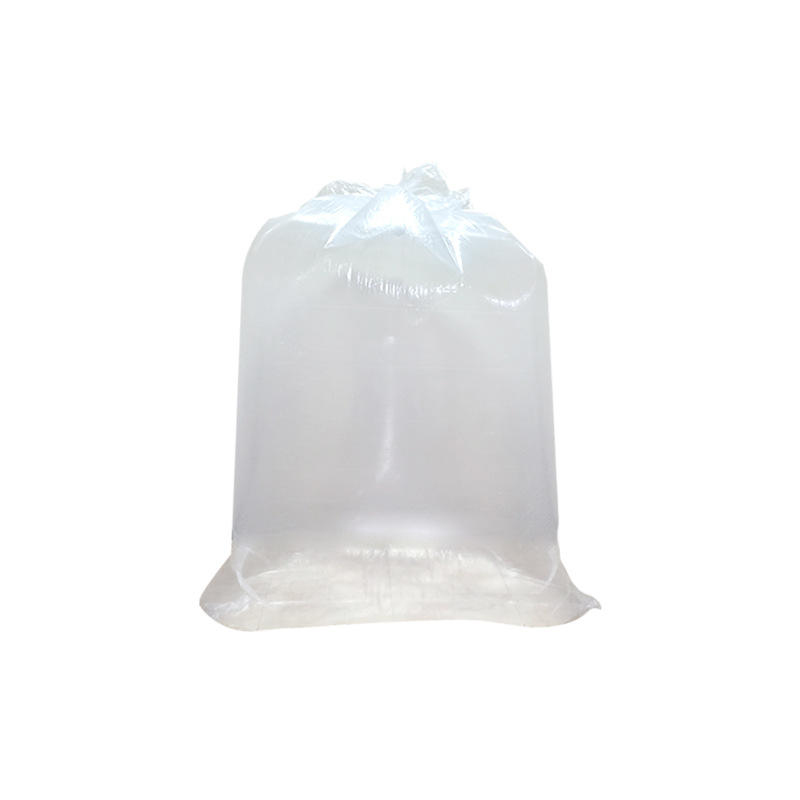
A waterproof PE liner option for FIBC container bags may be relevant when moisture protection is the dominant requirement, but the buyer should request the actual barrier and construction evidence needed for the project. Product names alone are not test results.
A representative quotation comparison
Representative scenario — not a claimed customer case.
A building-material distributor asks three suppliers for a “1 ton bag of sand price.” One quote covers a loose liner, one covers a complete unlined FIBC, and one includes an outer bag with a form-fit liner and printing. The buyer initially treats the numbers as competing unit prices.
The RFQ is revised to specify packaging only, a one-ton sand application, product bulk density, outer-bag dimensions, SWL and safety factor, liner construction, top and bottom arrangement, printing, sample approval, packing, quantity, Incoterm, and destination. The revised offers show comparable scopes and separate optional costs, allowing the buyer to evaluate delivered packaging value rather than the lowest unexplained number.
FAQ
Does a 1 ton bag of sand price include the sand?
It depends on the seller and quotation. A packaging supplier may quote an empty FIBC, a liner, or a complete lined bag, while a material supplier may quote filled sand and delivery. The RFQ and unit description must state the scope explicitly.
Is a PE liner included in every one-ton FIBC?
No. Liners are selected when the product or process needs additional moisture, dust, cleanliness, containment, or discharge control. Confirm whether the offer is unlined, supplied with a loose liner, or supplied with a form-fit liner.
Why are two form-fit liner prices different?
Differences can come from film material, dimensions, thickness basis, formed shape, seams, spouts, closures, attachments, tolerances, testing, packing, quantity, and commercial terms. Compare the returned datasheets and drawings before comparing unit prices.
What information determines the correct bag volume for one tonne of sand?
Provide loose or compacted bulk density as applicable, filling method, target fill level, particle characteristics, moisture condition, and desired filled dimensions. Mass capacity alone does not establish the volume or final bag shape.
Should buyers request a sample before a bulk order?
A sample can verify dimensional fit, filling, liner behavior, discharge, printing, and handling. Define which sample attributes and test results will be frozen for production, because an unrecorded sample does not control a later bulk order.
How should freight be compared?
Use the same Incoterm, destination, shipment quantity, transport mode, packing method, and currency. Compare package dimensions and weight as well as unit price. Separate tooling, testing, documents, inland charges, and freight where possible.
What should buyers send for an accurate quote?
Send ZhengYi FIBCs the required scope, bulk material and density, fill weight, outer-bag drawing, SWL and safety factor, liner construction, filling and discharge interfaces, printing, test and document needs, order quantity, packing, Incoterm, destination, and sample requirement. Use the ZhengYi FIBCs contact page to request a marked quotation and deviation response.