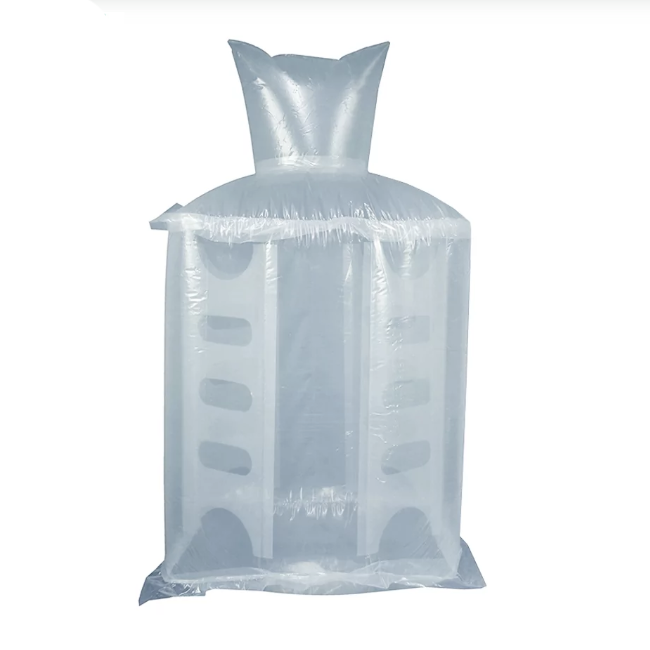
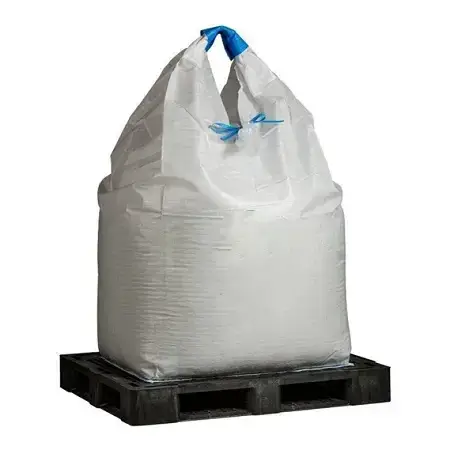
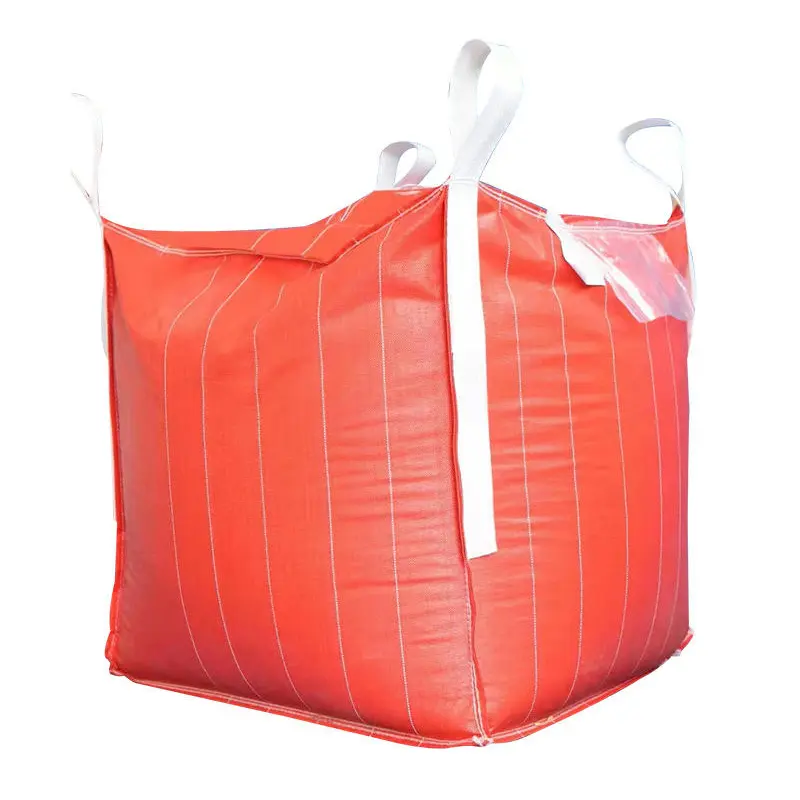
A reliable evaluation starts with the filled product and handling process, not with the phrase “one-ton bag.” Define the required safe working load, bulk density, filled volume, filling and discharge equipment, lifting method, reuse policy, liner or ventilation needs, and destination-market documentation. Then ask each supplier to return one controlled specification, supporting test evidence, and a clear deviation list. A 1,000 kg FIBC and a 1,500 kg food-grade FIBC are different purchased configurations; neither capacity, hygiene status, nor liner performance should be inferred from a generic catalogue image or an approximate bag size.
A Supplier Cannot Quote the Right Bag Until the Duty Is Clear
The first purchasing decision is whether the project actually needs an FIBC and what material it will carry. ISO 21898:2024 covers flexible intermediate bulk containers for non-dangerous solids in powder, granular, or paste form that are designed for lifting from above. It addresses materials, construction, design, type testing, marking, selection, and safe use within that scope. It does not replace the project’s own definition of product behavior, hygiene controls, filling equipment, transport route, or discharge method.
That boundary matters when comparing FIBC bulk bag configurations. A bag for dense mineral material, a bag for aerated powder, and a ventilated bag for agricultural produce may all have a nominal capacity near one tonne, yet they impose different loads on the fabric, seams, loops, liner, and closures. If the material description is vague, the supplier may quote a technically reasonable bag that is wrong for the actual filling and handling system.
| Project question | Buyer input | Supplier response | Why it changes the offer |
| What will be filled? | Material name, bulk density, particle form, moisture sensitivity, flow behavior | Proposed bag volume, fabric and liner arrangement | Density and flow determine filled mass, shape, pressure distribution, and discharge behavior |
| How much will each bag carry? | Required net fill mass and permitted tolerance | Declared SWL and applicable design/test basis | The nominal bag name is not a substitute for a controlled load rating |
| How will it be handled? | Fork, crane, filling frame, pallet, loop access and discharge arrangement | Loop style, dimensions, seam design and handling limitations | Loop geometry must suit the equipment without twisting or concentrating load |
| What barrier is required? | Dust control, moisture barrier, ventilation, liner connection and closure needs | Coated fabric, liner, mesh panels, spouts and closure details | Ventilation and barrier performance solve opposite problems in some applications |
| What evidence will release the order? | Drawing approval, sample, test records, declarations and inspection plan | Document list, sample scope, lot controls and declared deviations | Comparable evidence prevents an apparently equal quote from hiding a different scope |
“1 Ton” Defines a Load Target, Not a Complete FIBC Specification
Procurement teams often use “one-ton bag” as a convenient product name. The purchase order, however, needs a specific safe working load. The bag’s physical size does not establish that rating, and a larger bag is not automatically stronger. Fabric construction, seam design, lifting components, testing basis, intended number of trips, and the complete bag design all contribute to the accepted configuration.
Nor should a 1,500 kg offer be treated as a simple upgrade from 1,000 kg. A higher SWL may change the structure and evidence required, while the buyer’s filling frame, forklift access, pallet pattern, and transport limits may still be designed around the original bag. The correct comparison is therefore 1,000 kg against the project duty—not 1,000 kg against the highest capacity shown in a supplier catalogue.
Ask the supplier to identify the SWL on the offered specification and to keep it consistent across the drawing, label artwork, test documentation, quotation, and order acknowledgement. If any document describes 1 tonne while another describes 1.5 tonnes, the discrepancy should be closed before production. This is a document-control issue as much as a bag-strength issue.
Bulk Density Connects Bag Volume to Actual Filled Weight
A bag’s gross volume and the material’s loose bulk density provide an initial estimate of how much product can fit, but real filling behavior adds uncertainty. Aerated powder may settle after filling. Irregular particles may leave voids. A liner can occupy space or change how material flows into corners. The filling process may also require headspace so that the inlet can be closed without contamination or spillage.
This creates a common sourcing error: a buyer sends only a target weight, and different suppliers assume different densities or filled heights. The resulting bags can have different dimensions even though every quotation says “1 ton.” One may fit the filling frame but bulge outside the pallet footprint; another may stay within the footprint but fail to accept the intended net mass without overfilling.
Provide a representative bulk-density range rather than one optimistic number. If density changes by grade, season, moisture content, or process state, state that range and identify the worst relevant condition. The supplier can then propose a nominal volume and filled dimensions for approval. A pre-production sample or filling trial is particularly valuable when the material compacts, bridges, retains air, or has an unusual particle shape.
Handling Geometry Deserves the Same Attention as Bag Strength
Lifting loops are working interfaces. Their length, position, construction, and access must match the buyer’s forks, hooks, lifting frame, and operating sequence. A loop can be strong on paper yet awkward in service if the operator cannot engage it cleanly or if the lifting device pulls it at an unintended angle. Similar problems occur when the filled bag is wider than the pallet or when discharge equipment does not support the bag in the expected way.
A useful supplier drawing therefore shows more than outer width and height. It identifies loop arrangement and free height, inlet and outlet geometry, closure method, seam position, document pouch or label location when required, and the dimensions that interface with filling and discharge equipment. Approval of that drawing fixes the purchased geometry. A catalogue data sheet alone rarely captures every project interface.
Single-trip and multi-trip use also need an explicit decision. A buyer should not assume that an undamaged-looking bag can be reused. The intended service category, handling instructions, inspection method, and acceptance basis belong in the specification. Damage from dragging, snagging, ultraviolet exposure, chemical attack, or improper fork engagement may not be represented by a simple visual comparison between new and used bags.
Food Contact, Ventilation, and Liners Are Separate Decisions
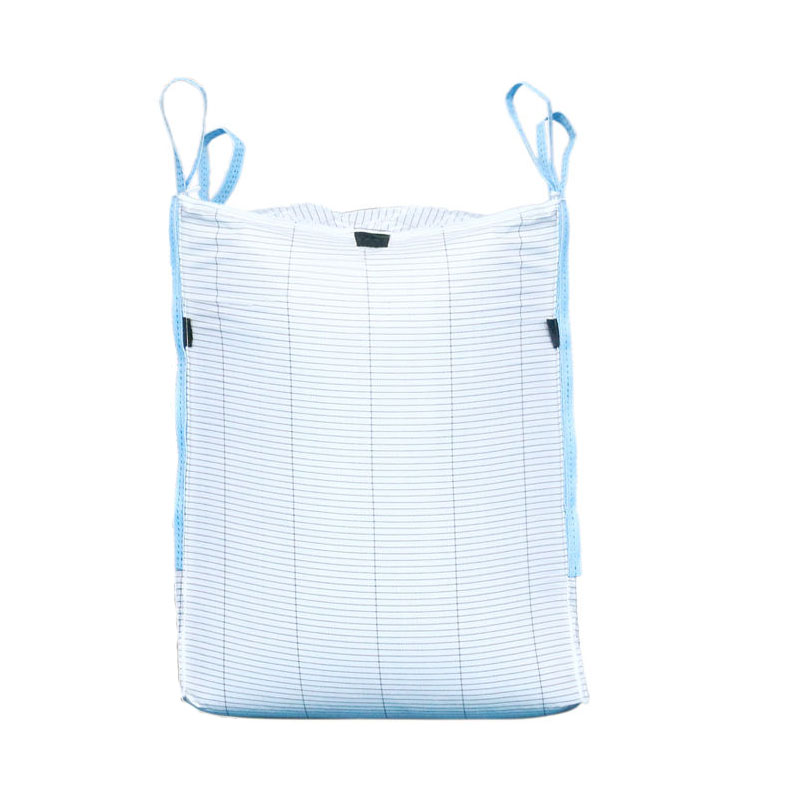
“Food grade” is not a complete bag design. It can involve the regulatory status of materials for an intended food-contact use, manufacturing hygiene, contamination control, traceability, packaging, and the conditions under which the bag will contact the product. FDA listings for polypropylene, for example, direct users to the applicable regulation and conditions of use; the name of the polymer by itself does not prove that every finished bag, additive, ink, liner, or manufacturing process is suitable for a particular food.
Ventilation and liners must then be evaluated against the product. Fresh produce may need airflow and moisture release, while fine food powder may need dust containment and a cleaner internal barrier. Adding an impermeable liner to a ventilated construction can defeat the airflow objective unless the whole system is designed accordingly. Conversely, removing the liner may expose a moisture-sensitive product or allow fine particles to escape through the woven structure.
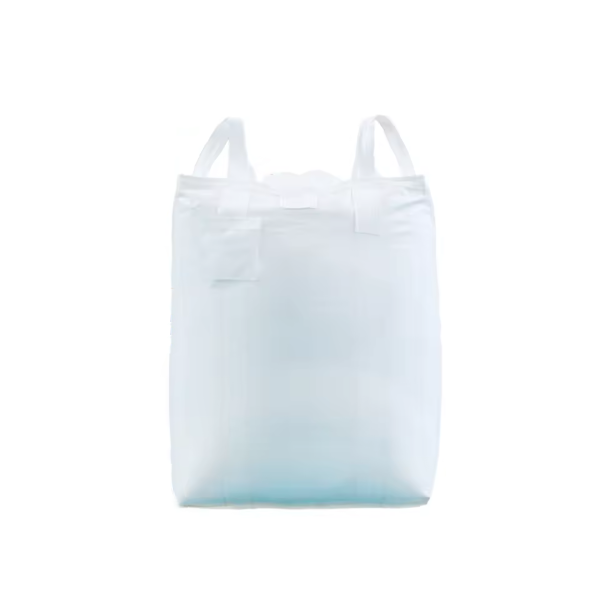
Project teams comparing a 1 tonne requirement with a 1.5 tonne food-grade FIBC with ventilation and liner options should treat the page as a configuration reference, not evidence that one arrangement suits every food product. The buyer still needs to define the commodity, direct-contact surfaces, airflow or barrier objective, temperature and storage conditions, cleaning expectations, and destination-market documentation.
For a broader product evaluation, the food-grade polypropylene FIBC product detail provides a relevant starting point. The final release should remain tied to an approved specification and the evidence returned for the ordered bag, rather than to general product-family language.
Evaluate the Evidence Behind the Supplier’s Answer
A capable response is specific enough to audit. It identifies the proposed configuration, states what is standard and what is custom, and lists any assumptions. It also connects each critical claim to an appropriate document. Material declarations support material identity. An approved drawing controls geometry. Type-test or design-validation records support the defined bag design. In-process and final inspection records show how production is checked. Lot identification and label control help trace the delivered bags back to the accepted order.
These documents do not all answer the same question. A material declaration cannot prove the finished bag’s lifting performance. A load test does not prove food-contact suitability. A sample can confirm dimensions, workmanship, closure, and equipment fit, but it cannot by itself represent every production lot. Supplier evaluation becomes much clearer once evidence is assigned to the claim it is meant to support.
Request a deviation list even when the quotation appears to match. A supplier may have substituted a standard loop length, different liner attachment, alternate document pouch position, or different packing quantity to make the offer workable. Those changes may be acceptable, but they should be visible before price and lead time are compared.
Compare One Controlled Configuration, Then Compare Price
Shortlist suppliers only after normalizing the technical scope. Use the same material description, net fill mass, bulk-density range, nominal dimensions, SWL, service category, top and bottom construction, liner or ventilation arrangement, lifting interface, printing, label, document package, inspection points, packing method, quantity, and delivery basis. If a bidder cannot meet one field, the quotation should identify the proposed alternative rather than silently pricing a different bag.
For the RFQ, attach the current specification or drawing revision and include photos or interface dimensions for the filling, lifting, palletizing, and discharge equipment where helpful. Ask the supplier to return the completed technical schedule, offered drawing, evidence list, sample plan, packing details, and every deviation. This creates a reviewable offer and reduces changes after artwork or production approval.
ZhengYi FIBCs can review those project inputs through its FIBC project specification inquiry form. Submit the intended material, bulk-density range, target net weight, handling method, bag construction, barrier or ventilation objective, documentation needs, quantity, and delivery basis. The quotation should then confirm the exact offered configuration and separate any options or deviations before commercial comparison.