Buyers sourcing FIBC bulk bags for coffee beans should define the packed product and handling process before selecting bag size or capacity. A useful specification should include the target net weight, actual bulk density, required bag volume, filling method, discharge method, lifting arrangement, liner or fabric requirement, storage conditions, transport route and applicable packaging documentation.
The nominal payload alone is not enough. Two projects requiring the same net weight can need different bag dimensions or constructions because the packed material, filling process and logistics conditions are different.
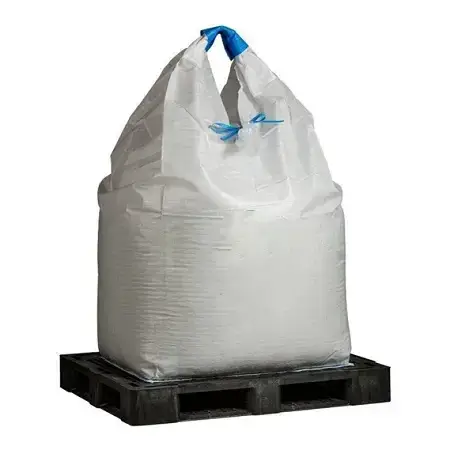
For ZhengYi FIBCs, available configurations include customized bag dimensions, different fabric constructions, filling-spout or open-top options, flat or discharge bottoms, optional HDPE/LDPE liners, multiple lifting-loop designs and project-specific SWL and safety-factor configurations. The correct combination should be confirmed from the buyer’s actual project data.
Start With the Coffee Bean Project, Not a Standard Bag Size
A request such as:
“Please quote a 1-ton FIBC for coffee beans.”
is not yet a complete procurement specification.
It gives the supplier a target mass, but does not define how much internal volume is required or how the bag will interact with the buyer’s filling, lifting, storage and discharge systems.
Before discussing bag dimensions, the buyer should provide the following project information:
| Buyer Input | Why It Matters |
| Packed product | Defines the actual application |
| Target net weight | Establishes the required payload |
| Bulk density | Helps determine required bag volume |
| Product condition | Helps define fabric, liner and handling requirements |
| Filling method | Determines the top construction |
| Discharge method | Determines the bottom construction |
| Lifting equipment | Determines loop configuration |
| Storage conditions | Helps define protection requirements |
| Transport method | Affects filled dimensions and logistics planning |
| Packaging requirements | Defines documentation and acceptance needs |
This information gives the manufacturer a technical basis for recommending a bag rather than simply quoting an existing catalogue model.
Buyers can review ZhengYi’s FIBC Bulk Bags range as a starting point, but the final bag should still be matched to the specific project.
Calculate Required Volume From Net Weight and Bulk Density
Payload and bag volume are related, but they are not the same specification.
A useful starting calculation is:
Required product volume = Target net weight ÷ Actual bulk density
The bulk density should come from the buyer’s own product data or confirmed production data. It should not be estimated from a generic internet value when preparing a final FIBC specification.
This matters because the same nominal bag capacity does not guarantee that the physical dimensions are suitable for every material.
For example, if two materials have different bulk densities but the same target net mass, they will occupy different volumes.
The supplier therefore needs both:
Target Net Weight
and
Bulk Density
before finalizing dimensions.
The buyer should then allow for the actual filling process and the way the material settles in the bag rather than treating the calculated volume as the finished-bag dimension by itself.
Define the Top Design From the Filling Process
The next decision is how the coffee beans will enter the FIBC.
Available FIBC configurations can include:
- full open top;
- filling spout;
- top skirt or duffle;
- customized filling structure.
The correct option depends on the buyer’s equipment and operating method.
For a filling-spout project, buyers should provide:
- filling-head dimensions;
- required spout diameter;
- usable spout length;
- attachment or closure method;
- required filling rate;
- any dust or contamination-control requirements.
A top spout should therefore be specified as an equipment interface rather than simply selected because it is a common FIBC feature.
If an existing filling line is already in operation, the buyer should provide the relevant dimensions before sample production.
Decide Whether the Project Needs a Liner
A liner should not be included automatically simply because the packed material is a food or agricultural product.
The requirement depends on the project’s actual protection and process conditions.
The buyer should first define whether additional protection is needed for issues such as:
- moisture exposure;
- dust;
- outside contamination;
- direct product-contact requirements;
- storage conditions;
- transport conditions.
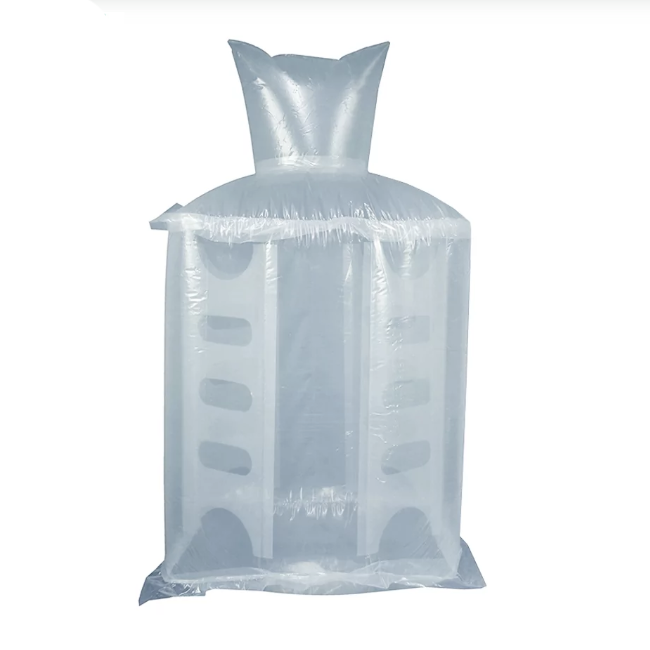
ZhengYi’s available FIBC configurations include HDPE and LDPE liner options, while separate FIBC liner solutions are also available for projects requiring an additional inner barrier.
If a liner is required, the RFQ should not say only:
“PE liner required.”
It should define or ask the supplier to confirm:
- liner material;
- liner type;
- liner thickness where required;
- method of fixation;
- top interface;
- bottom interface;
- whether the liner must follow the outer bag shape.
The liner and outer FIBC should be evaluated as one packaging system.
Match the Bottom Design to the Unloading Process
Coffee-bean projects may not all use the same unloading method.
The supplier therefore needs to know what happens after the filled FIBC reaches its destination.
Possible bottom configurations in the available product range include:
- flat or plain bottom;
- discharge spout;
- customized discharge construction.
A discharge spout should be considered when the process requires controlled emptying into downstream equipment.
The buyer should identify:
- discharge equipment;
- required outlet dimensions;
- required discharge control;
- whether repeated opening and closing is expected;
- how residual product will be managed.
If the bag will simply be opened or emptied using another process, a discharge spout should not be specified without a clear operational reason.
Specify the Lifting Interface
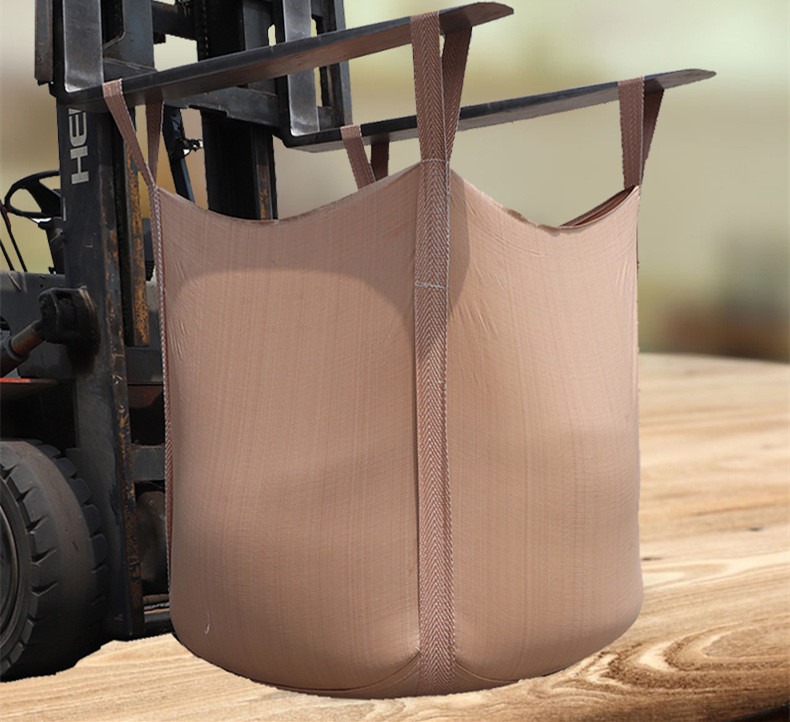
The FIBC must also match the equipment that will physically lift it.
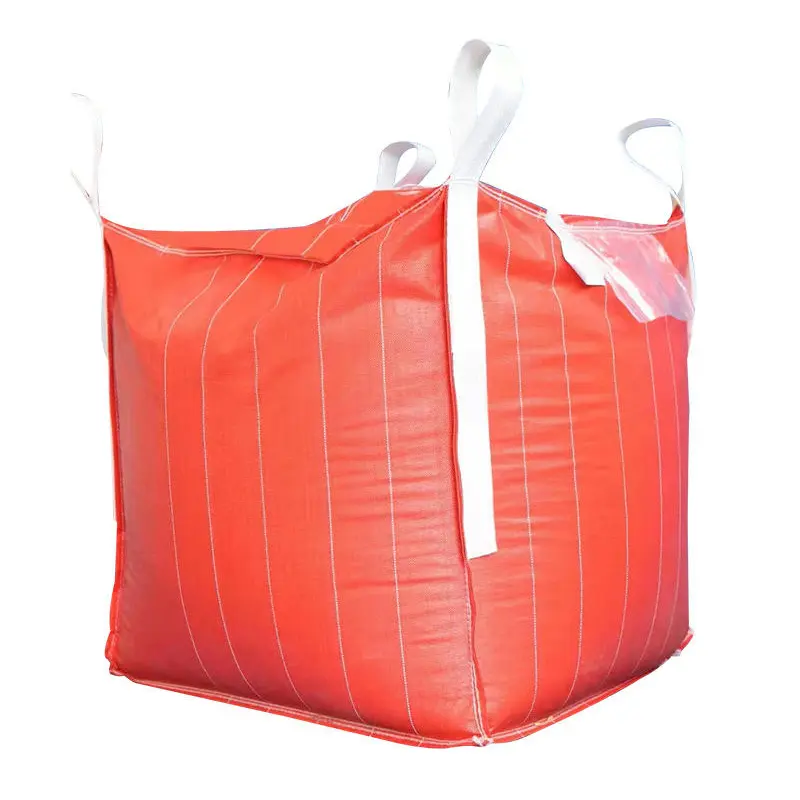
Available ZhengYi configurations include:
- cross-corner loops;
- four-point lifting;
- two-strap configurations;
- other customized loop arrangements.
This means the RFQ should identify the lifting method rather than simply asking for “four loops.”
Relevant information includes:
- forklift or crane handling;
- lifting-point arrangement;
- required loop geometry;
- operating clearances;
- handling during filling;
- handling during warehouse movement;
- handling during container loading.
The objective is to ensure that the loop configuration matches the buyer’s actual handling system.
Define SWL and Safety Factor Separately
Safe Working Load and safety factor are important purchasing fields, but they should not be treated as synonyms for bag size.
The current ZhengYi product data for the referenced FIBC configuration lists:
- SWL: 500–2000 kg
- Safety Factor: 5:1 / 6:1 / project requirement
The final specification should still be confirmed for the actual bag construction and intended use.
Buyers who need a fuller explanation can refer to ZhengYi’s existing guide on FIBC Safety Factor, 5:1, 6:1 and SWL.
The important procurement rule is simple:
Do not increase nominal capacity as a substitute for defining the correct engineering requirement.
Instead, give the supplier the intended load and operating conditions and ask them to confirm the corresponding approved bag specification.
Storage and Transport Conditions Should Be Included in the RFQ
The filled FIBC does not stop being a packaging system after filling.
The RFQ should also describe what happens during:
warehouse storage → internal transport → export shipment → destination handling
Useful buyer inputs can include:
- warehouse environment;
- expected storage duration;
- outdoor exposure, if applicable;
- pallet requirement;
- container-loading method;
- transport route;
- stacking or placement requirements;
- destination handling method.
If UV treatment or other protection is required, the requirement should be defined from the real exposure condition rather than included as a generic feature.
The source product configuration supports UV-treated or non-UV-treated options, allowing this field to be confirmed project by project.
A Practical Coffee Bean FIBC Specification Matrix
Before comparing suppliers, buyers can freeze the main fields in one table.
| Specification | Buyer Input | Supplier Confirmation |
| Packed material | Coffee beans / exact product | Compatibility |
| Target net weight | kg per bag | Confirmed SWL |
| Bulk density | Actual project value | Required volume |
| Bag dimensions | Project requirement | Final dimensions |
| Fabric | Requirement or operating conditions | Recommended construction |
| Surface | Coated / plain if required | Confirmed |
| Liner | Required / not required | Material and construction |
| Top | Filling method | Top configuration |
| Bottom | Discharge method | Bottom configuration |
| Lift | Forklift / crane / system | Loop configuration |
| Safety factor | Project requirement | Confirmed |
| UV requirement | Exposure condition | Treatment |
| Printing | Required markings | Print specification |
| Quantity | Order volume | Production scope |
| Documentation | Buyer requirement | Available evidence |
This table is far more useful than asking suppliers to quote “one standard coffee bean jumbo bag.”
How the Available ZhengYi Product Configuration Maps to the Requirement
The target product data provides several configurable fields that can be used when developing a coffee-bean packaging specification:
| Buyer Requirement | Available Product Configuration |
| Bag construction | Tubular / circular / U-panel / rectangular |
| Material | 100% virgin PP |
| Fabric | Laminated / plain / vent / conductive |
| Size | Customized |
| Fabric weight | 110–230 gsm |
| Top | Full open / filling spout / top skirt / duffle |
| Bottom | Flat / plain / discharge spout |
| Liner | HDPE / LDPE / customized |
| Lifting | Cross-corner / 4-point / other listed configurations |
| SWL | 500–2000 kg |
| Safety factor | 5:1 / 6:1 / project requirement |
| UV | Treated or untreated |
| Surface | Coated or plain |
These options should be treated as configuration choices, not as features that every coffee-bean project automatically requires.
The referenced UN Certified FIBC product can provide a useful technical configuration reference, but its UN-certified positioning creates an important procurement boundary.
Do Coffee Beans Automatically Require a UN-Certified FIBC?
No such requirement is established by the project information supplied for this keyword.
The target product page is positioned as a UN-certified FIBC for dangerous-goods transportation, while its application list also includes grain and agricultural materials.
These two facts should not be combined into the assumption that coffee beans automatically require UN certification.
For a coffee-bean project, the buyer should first establish:
- product classification;
- applicable transport requirements;
- destination-market requirements;
- food or product-contact requirements;
- customer-specific packaging standards.
A UN-certified configuration should be specified only when the applicable project or transport requirements call for it.
Likewise, “food grade,” “UN certified,” “conductive,” and “UV resistant” describe different requirements. One does not automatically imply another.
This distinction prevents buyers from paying for an unnecessary configuration or, more importantly, assuming that one certification covers unrelated packaging requirements.
Coffee Bean FIBC RFQ Checklist
A useful RFQ can be organized into five sections.
Material
- exact packed product;
- product form;
- actual bulk density;
- target net weight;
- relevant moisture or contamination requirements.
Bag
- required dimensions;
- SWL;
- safety factor;
- fabric construction;
- coating requirement;
- liner requirement.
Process
- filling equipment;
- top configuration;
- discharge method;
- bottom configuration;
- lifting equipment;
- loop configuration.
Logistics
- pallet requirement;
- storage environment;
- UV exposure if applicable;
- container-loading method;
- destination handling.
Commercial and Documentation
- annual or project quantity;
- printing;
- destination market;
- required documentation;
- sample requirement;
- delivery destination.
The more clearly these inputs are defined, the easier it becomes to compare supplier proposals on the same technical basis.
Conclusion
The correct FIBC bulk bag for coffee beans cannot be selected from nominal capacity alone.
A strong purchasing specification begins with:
packed material → bulk density → target weight → required volume → filling → liner/fabric → lifting → storage → transport
and only then moves to the final bag construction.
ZhengYi FIBCs offers multiple bag structures, top and bottom designs, liner options, lifting arrangements, SWL ranges and customized configurations that can be matched to project requirements.
Buyers preparing a coffee-bean packaging project can contact ZhengYi FIBCs with the product, bulk density, target net weight, filling/discharge method, lifting system, quantity and destination so the required configuration can be confirmed before quotation.
FAQ
What information should I provide when requesting FIBC bulk bags for coffee beans?
Provide the packed product, target net weight, actual bulk density, required bag dimensions if known, filling method, unloading method, lifting system, liner or protection requirements, storage conditions, quantity and destination.
Is a 1-ton FIBC always the same size?
No. Nominal payload does not define the volume occupied by the product. Required bag volume depends on the actual bulk density and project filling conditions.
Does a coffee-bean FIBC always need a PE liner?
Not automatically. The liner requirement should be based on the project’s protection, contact, storage, transport and process requirements.
Do coffee beans require a UN-certified bulk bag?
The supplied project information does not establish such a requirement. UN certification should be specified only when applicable transport or project requirements require a UN-certified FIBC.
What is the first specification a buyer should confirm?
Start with the packed product, actual bulk density and target net weight. These inputs provide the foundation for determining required volume and the rest of the FIBC configuration.