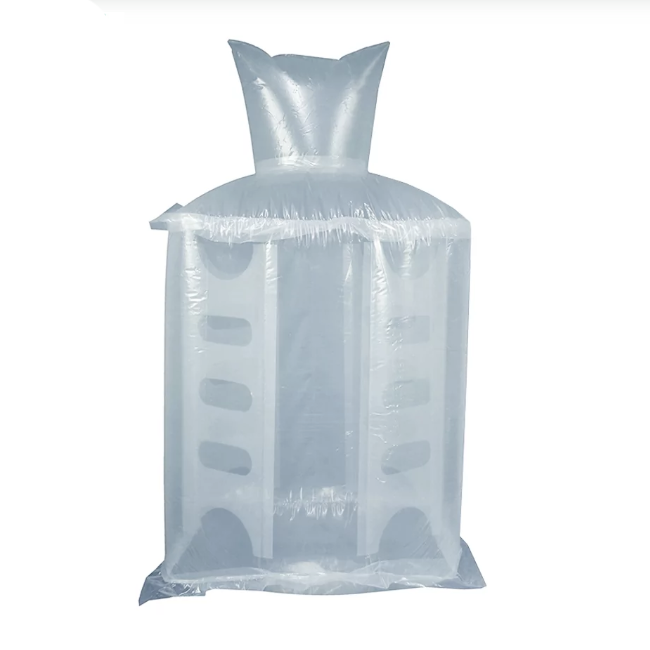
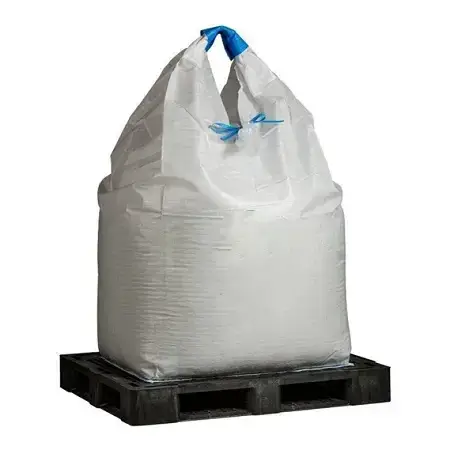
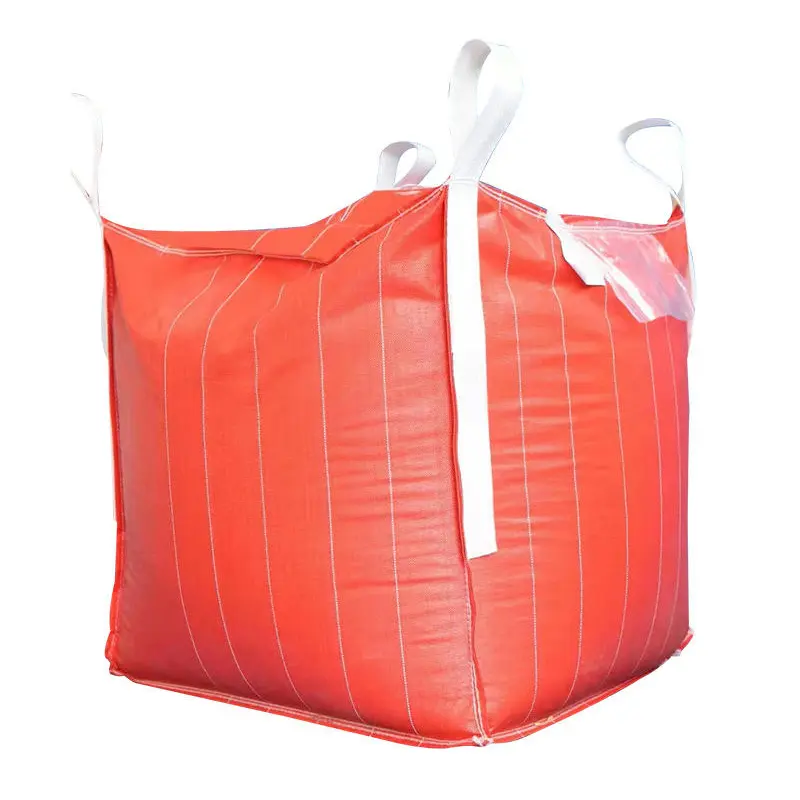
Canadian buyers sourcing food-grade PP woven bags should first determine whether the project needs a small woven sack or an FIBC bulk bag, then freeze the food-contact application, packed food, bag construction, liner or barrier requirement, safe working load, dimensions, filling and discharge interfaces, contamination-control expectations, documentation, sampling and acceptance criteria. For a food-grade FIBC, “food grade” is not a complete specification and it is not a substitute for Canadian food-packaging due diligence. The buyer needs evidence that the actual materials and finished packaging are suitable for the intended food-contact use, while the bag’s mechanical and process configuration must also fit the filling, storage and discharge system.
First Confirm That the Required Product Is an FIBC, Not a Small PP Woven Sack
The search phrase “food grade PP woven bags Canada” can refer to several packaging formats. Some buyers need 20–50 kg sewn woven sacks; others need large flexible intermediate bulk containers for hundreds of kilograms or more. Those products have different lifting, filling, discharge and safety requirements.
The target product in this article is a food-grade FIBC bulk bag made from woven polypropylene. It is intended to be handled as a bulk container with lifting loops and project-specific filling/discharge features. If the application actually needs a conventional small sack for manual handling, retail distribution or bagging lines, the buyer should evaluate the PP Woven Bag category instead of forcing an FIBC design into the project.
For this procurement path, ZhengYi’s Food Grade FIBC Bag category is the relevant product family.
This product-format check should happen before any discussion of liner, certification or printing. A quotation can be technically correct but commercially useless if the supplier and buyer are discussing different package sizes and handling systems.
Define the Food and the Actual Contact Conditions
Food-contact suitability depends on intended use. A bag for dry grain, flour, sugar, starch, salt, nuts or another ingredient does not necessarily have the same contact conditions as a bag exposed to high fat content, elevated temperature, long storage or aggressive flavor compounds.
The RFQ should identify:
- food or ingredient name;
- powder, granule or other physical form;
- normal storage temperature;
- expected contact duration;
- whether the food contacts woven PP directly or an inner liner;
- moisture or fat sensitivity where relevant;
- allergen or contamination-control requirements;
- whether the packaging is used only for transport or also for longer-term storage.
These inputs define the chemical and hygienic contact scenario. They also affect construction. A dry, free-flowing ingredient may work with one liner strategy, while a fine hygroscopic powder may need tighter moisture and dust control.
The supplier should return a material/contact declaration tied to the proposed bag construction rather than a generic statement that the factory “makes food bags.”
For Canada, Food-Contact Evidence Must Be Matched to the Intended Use
Canadian food-packaging responsibility is based on the safety of the material in its intended use. Health Canada’s Food and Drug Regulations prohibit the sale of food in packaging that may transfer harmful substances to the food. For most food-packaging materials, a Health Canada Letter of No Objection can be requested voluntarily; it is not a general legal approval and it does not remove the food seller’s responsibility to ensure the packaging is safe and suitable.
CFIA guidance also places responsibility on food businesses to use packaging materials that are safe, suitable and compliant with applicable requirements. Depending on the establishment and product, buyers may retain supporting evidence such as a Health Canada LONO where available, a supplier or manufacturer Letter of Guarantee, composition information, declarations of intended use, or other documentation accepted by the buyer’s preventive-control program.
That means a Canadian buyer should not ask only:
“Is this bag FDA approved?”
The better RFQ asks:
- what materials form the food-contact layer;
- whether colorants, additives, coatings or liners are part of the contact construction;
- what documentation supports the intended food-contact use;
- whether the supplier has a Health Canada LONO for the relevant material/use, if the buyer requires or prefers one;
- whether a Letter of Guarantee or equivalent supplier declaration is available;
- whether any limitation applies to food type, temperature or contact duration.
This keeps the compliance discussion tied to the actual bag instead of importing a foreign-market label that may not answer the Canadian buyer’s question.
Separate Structural PP Fabric From the Food-Contact Barrier
An FIBC can use woven polypropylene as the structural body while food-contact protection is provided by the woven surface itself, a coating, an inner liner or another approved construction. Buyers should specify which layer is intended to contact the food.
If a PE liner is required, freeze the liner’s role:
- moisture barrier;
- contamination barrier;
- sift or dust control;
- clean food-contact surface;
- oxygen or aroma protection if a specialized barrier structure is needed.
Do not assume that “with liner” defines the liner. The supplier needs enough information to select the liner form, thickness or construction, attachment method and relationship to the fill/discharge features. If the food is filled through a spout, the liner interface should be reviewed so it does not collapse or obstruct the flow path.
If no liner is used, the buyer should make the direct-contact requirement explicit and request evidence for the actual woven/coated PP construction.
Hygiene and Contamination Control Need an Acceptance Plan
Food-grade procurement should address how the finished bags are kept clean from production through delivery. The buyer’s requirements may cover production-area hygiene, foreign-material control, storage, bag inspection, inner packaging and shipping protection.
The supplier should be asked to describe the controls that are relevant to the order rather than provide generic factory statements. Depending on the buyer’s quality system, evidence may include a hygiene procedure summary, inspection checklist, packaging method, traceability information and agreed contamination limits.
At incoming inspection, buyers can check:
- visible cleanliness of the bag interior and liner;
- foreign fibers, dirt, oil or obvious contamination;
- liner damage, holes or poor sealing where applicable;
- incorrect print, label or product code;
- mixed bag lots or unidentified production lots;
- packing damage that exposes clean bags before use.
These checks do not replace chemical food-contact evidence. They address a different risk: keeping an acceptable packaging material clean and correctly identified through manufacturing and logistics.
Load, Dimensions and Bulk Density Still Control the Mechanical Design
Food-contact documentation does not determine whether the bag can safely hold the required product. The mechanical specification still needs target fill weight, bulk density, bag volume, safe working load, safety factor, lifting arrangement and filled dimensions.
A low-density ingredient may need a larger bag than a dense ingredient at the same net weight. Filled dimensions may then affect pallet footprint, warehouse height and container loading. Loop geometry must match forklifts or lifting frames used by the Canadian receiving site.
The RFQ should therefore include:
- target net weight;
- bulk density or practical density range;
- required bag dimensions or dimensional constraints;
- required SWL and safety factor;
- lifting-loop arrangement and loop height;
- pallet and container constraints;
- whether stacking is permitted by the buyer’s handling plan.
These values make quotations comparable. One supplier should not be pricing a smaller bag with a lower load basis while another supplier is quoting a larger, heavier-duty FIBC.
Freeze Filling and Discharge Interfaces Without Rewriting the Entire Spout Guide
ZhengYi already has separate content covering detailed food-grade FIBC spout decisions for fine powders. For this Canadian procurement topic, the important step is to freeze the interface fields that affect the order without turning the article into another filling-spout tutorial.
The RFQ should identify the filling method, fill-spout or opening type, required spout dimensions, closure method, discharge method, discharge-spout requirements and whether liner spouts must align with the outer bag.
The key acceptance question is whether the approved bag fits the customer’s existing filler and discharger. A food-safe material package does not solve a mechanical mismatch at the filling head.
Where the customer’s process is dust-sensitive or enclosed, the buyer should also state the dust-control expectation so the supplier can recommend appropriate closures, liner interfaces or seam options.
Printing, Labels and Lot Traceability Should Support the Food Program
Food-ingredient packaging often needs clear lot identity. The buyer should specify what information is required on the bag or label, which fields are fixed artwork and which fields vary by production lot.
Possible requirements include:
- customer or product code;
- bag specification revision;
- supplier production lot;
- food-contact or handling statements approved by the buyer;
- country-of-origin or destination labels where required;
- barcode or internal traceability code;
- printing restrictions for the food-contact program.
Traceability should connect the received bag to the production and inspection record. That makes it easier to investigate a hygiene, dimensional or documentation issue without rejecting unrelated lots.
What Should a Canadian Buyer Approve Before Mass Production?
A controlled pre-production approval should combine the bag sample with the supporting documents. Neither one is enough by itself.
| Approval Item | What to Check | Why It Matters |
| Food-contact construction | Woven PP, coating, liner and any other contact layers match the declared construction | Connects documentation to the actual bag being purchased |
| Food-contact evidence | Supplier declaration, LONO if applicable/required, Letter of Guarantee or other accepted evidence matches intended use | Supports the Canadian buyer’s packaging-safety review |
| Bag dimensions | Body, loops and spouts match the drawing | Confirms filling, handling and logistics fit |
| Load configuration | SWL, safety factor and lifting arrangement match the purchase specification | Separates food safety from mechanical suitability |
| Cleanliness | Interior, liner and packaging are free from visible contamination or damage | Creates a practical receiving standard |
| Filling/discharge fit | Spout and liner interfaces fit representative equipment | Prevents process mismatch after delivery |
| Labels/traceability | Artwork, codes and lot identification match the approved revision | Supports warehouse and preventive-control records |
After approval, the purchase order should reference the sample or drawing revision used for acceptance. If the supplier changes the resin, liner, coating, colorant, construction or food-contact layer, the buyer should require notification and decide whether re-approval is needed.
How Should Buyers Review ZhengYi’s Food-Grade FIBC Product?
ZhengYi’s High Quality Food Grade FIBC Bulk Bags Polypropylene Woven Packaging page is the corrected target product reference for this topic. The current client product data places it in the FIBC Bulk Bags / Food-Grade FIBC Bag family and identifies it as a B2B product supplied with specification confirmation and customization support.
The product page establishes the commercial product direction. It does not automatically prove suitability for every food, Canadian customer, contact temperature, storage period, liner construction or preventive-control program.
Canadian buyers should therefore use the page to identify the relevant product family, then request the material/contact documentation, bag construction, load configuration, hygiene controls, sample and lot evidence needed by their own food-safety system.
What Common Mistakes Make Food-Grade Bag Quotations Difficult to Compare?
Quotation ambiguity usually comes from mixing food-contact requirements with mechanical packaging requirements. Common examples include:
- asking for “food grade” without identifying the actual food or contact conditions;
- using “FDA approved” as a substitute for Canadian packaging review;
- not stating whether food contacts PP fabric, coating or PE liner;
- requesting a liner without defining its barrier function;
- omitting bulk density, so suppliers quote different bag volumes;
- not freezing SWL, safety factor or lifting loops;
- forgetting filling and discharge equipment interfaces;
- asking for a certificate without defining what product or material it must cover;
- approving a sample without linking it to the document revision and production lot;
- allowing material substitutions without buyer notification.
The solution is to normalize the specification first and compare price only after the same bag construction and evidence package are being quoted.
When Should the Buyer Choose a Different Packaging Format?
This article is specifically about food-grade PP woven FIBC bulk bags. The decision changes when the product or logistics require another format.
If the packed unit is a small manually handled sack, a conventional PP woven bag may be more appropriate. If the product needs a rigid container, hermetic high-barrier package or another specialized food-contact structure, an FIBC may not be the best solution. If the material is hazardous or has electrostatic risks, the project may require a UN-certified or static-protective FIBC architecture rather than a standard food-grade bulk bag.
Food-contact suitability and packaging-format suitability must both be satisfied. Passing one does not compensate for a failure in the other.
Build the Canadian Food-Grade FIBC RFQ Around Intended Use and Evidence
A complete inquiry should include:
- food or ingredient name;
- physical form and bulk density;
- target net weight;
- intended food-contact layer;
- liner, coating or barrier requirement;
- contact temperature and expected duration;
- moisture, dust, allergen or contamination-control requirements;
- required bag dimensions;
- SWL, safety factor and lifting arrangement;
- filling and discharge interfaces;
- cleanliness and packaging requirements;
- printing, label and traceability fields;
- Canadian food-contact documentation required by the buyer’s program;
- Health Canada LONO requirement if applicable to the buyer’s approval route;
- Letter of Guarantee or equivalent supplier declaration if required;
- sample and pre-production approval scope;
- incoming inspection and acceptance criteria;
- quantity and pallet/export packing;
- destination and logistics constraints;
- supplier deviations, substitutions and assumptions.
Ask suppliers to respond with Confirmed Construction / Food-Contact Evidence / Mechanical Configuration / Deviation / Alternative / Buyer Input Required. Once the food-contact use and bag configuration are aligned, the buyer can submit the specification through ZhengYi’s contact and RFQ page without relying on an ambiguous request such as “food grade PP woven bags for Canada.”