Choosing an FIBC liner is not simply a question of adding “more plastic” inside a bulk bag. The right liner must match the product, the filling equipment, the discharge method and the operating environment. A well-specified liner can reduce moisture exposure, product leakage and contamination while supporting smoother filling and emptying.
Quick answer: For most free-flowing powders and granules that need basic protection from moisture and dust, a polyethylene (PE) liner is a practical starting point. A loose liner offers economy and flexibility; a tabbed liner provides better stability; and a form-fit liner is usually the better choice when clean filling, controlled discharge and repeatable high-speed handling are priorities. Static-sensitive or food-contact applications require additional material and compliance checks.
Why Use a Liner Inside a Bulk Bag?
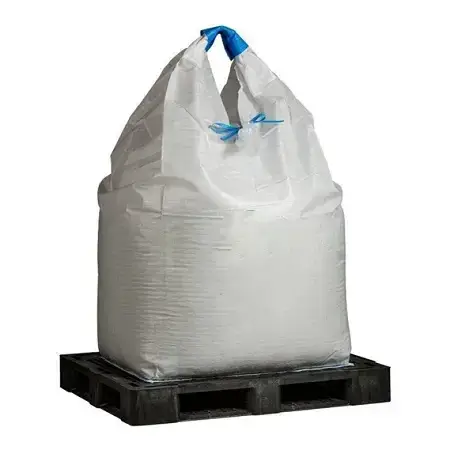
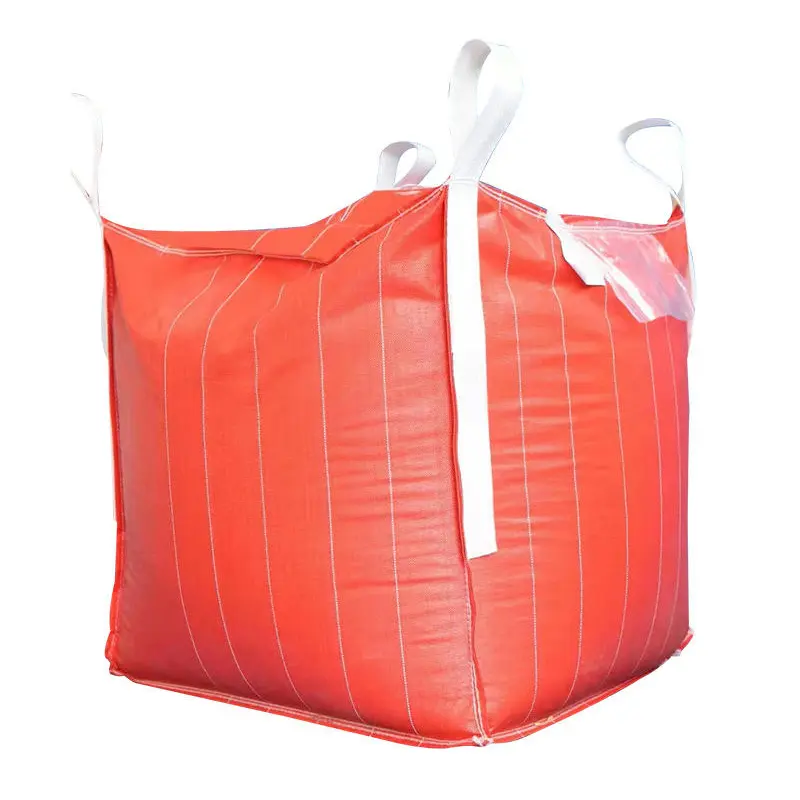
A standard woven polypropylene FIBC provides strength and efficient bulk handling, but woven fabric is not automatically an airtight or moisture-proof barrier. An inner liner creates an additional layer between the product and the outer FIBC.
Depending on its design and material, a bulk bag liner may help:
- reduce the entry of moisture, dust and dirt;
- contain fine powders that could migrate through woven fabric or seams;
- protect sensitive granules, resins, ingredients and chemical powders;
- support cleaner filling and discharge;
- reduce direct contact between the product and the outer bag;
- improve product recovery by limiting material trapped in folds or corners.
A liner does not replace correct FIBC selection. The outer bag still carries the load, and its safe working load, construction, lifting loops and filling or discharge design must suit the application.
The Three Common FIBC Liner Configurations
| Liner type | How it sits in the FIBC | Best suited to | Main consideration |
| Loose or inserted liner | Placed freely inside the bag; may be tied or secured at the openings | General powders and granules; cost-sensitive applications | Can fold, twist or move if it is not installed and inflated correctly |
| Tabbed liner | Attached to the FIBC at selected points | Applications needing greater liner stability during filling and discharge | Attachment position must match the bag and process |
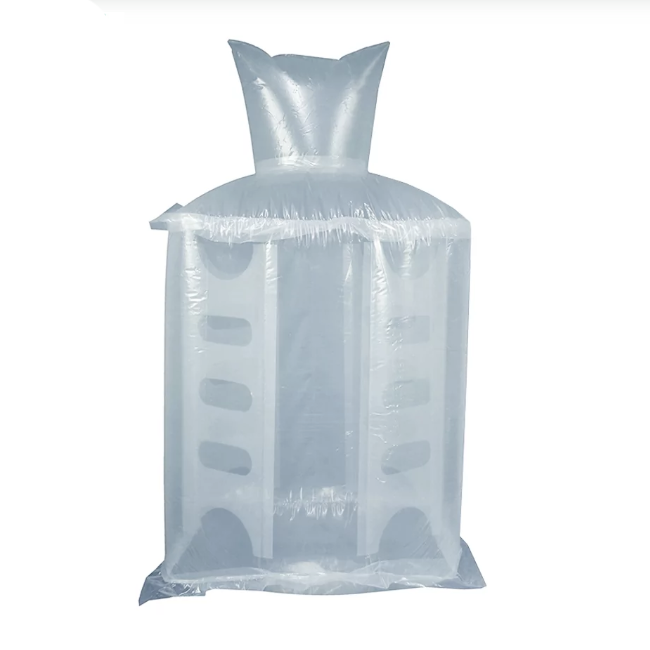
| Form-fit liner | Shaped to follow the body, top and bottom of the FIBC | Automated filling, controlled discharge, sensitive products and high product recovery | Requires more precise sizing and specification |
1. Loose PE Liners: Flexible and Economical
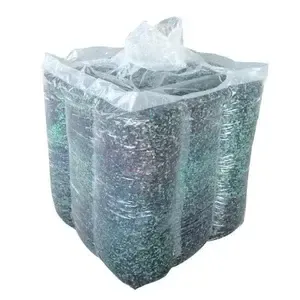
A loose PE liner is a separate inner sleeve or shaped bag inserted into the FIBC. It can be a cost-effective option when the filling process is relatively simple and the product needs a basic barrier against moisture, dust or contamination.
Loose liners can work well for many dry powders, pellets and granules, but they must be correctly sized. A liner that is too small may be placed under stress as the bag fills. A liner that is too large may develop excessive folds, restrict discharge or become drawn out of the FIBC.
2. Tabbed Liners: More Control During Handling
A tabbed liner is secured to the outer FIBC at designed attachment points. The tabs help keep the liner in position, which can reduce twisting or movement during filling and emptying.
This design is useful when a buyer wants more process stability without moving to a fully shaped liner. The location and strength of the tabs should be confirmed with the supplier because the liner and outer bag must function as one packaging system.
3. Form-Fit Liners: Shaped for Process Efficiency
A form-fit liner is manufactured to follow the shape of the FIBC, including its body and, when required, the filling and discharge spouts. Because the liner better matches the bag geometry, it can reduce excess film in the corners and improve product flow.
This configuration is often selected for:
- fine or high-value powders;
- plastic resin and chemical granules;
- food ingredients requiring a controlled packaging environment;
- automated or high-speed filling lines;
- operations where clean, predictable discharge matters;
- products for which residual material and product loss must be minimized.
ZhengYi offers a complete Big Bag Liner product category, including the 1000kg FIBC Form-Fit Liner Bag for Powder and Granules and the Bulk Bag PE Inner Liner for FIBC Jumbo Bags.
Seven Questions to Answer Before Ordering
The most reliable way to select a liner is to describe the entire use case rather than request a liner by thickness alone.
1. What Material Will Be Packed?
Tell the supplier the product name, particle size, bulk density and flow behavior. Fine powders can escape through very small openings, while sharp or abrasive particles may demand greater puncture and tear resistance.
Also disclose whether the material is hygroscopic, oily, chemically active, food-grade, pharmaceutical-grade, combustible or otherwise sensitive. A generic liner recommendation is not appropriate for every product.
2. How Much Moisture Protection Is Required?
“Waterproof” can mean different things in different purchasing specifications. Clarify whether the liner must protect against short-term humidity, rain exposure during handling, long sea transport or a defined water-vapor transmission rate.
Standard PE liners provide a useful moisture barrier for many applications. Highly sensitive products may require a co-extruded, foil or other high-barrier construction. Barrier performance should be verified using relevant test data rather than inferred from film thickness alone.
3. How Will the FIBC Be Filled?
The liner opening must work with the filling head. Important details include:
- open-top, duffle-top or filling-spout configuration;
- filling-spout diameter and length;
- gravity, pneumatic or auger filling;
- whether the liner will be pre-inflated;
- filling speed and dust-control method.
FIBCA’s safe handling guidance recommends pre-inflating liners for ease of use, extending them past the fill opening during filling and following the manufacturer’s closure instructions.
4. How Will the Product Be Discharged?
For a flat-bottom FIBC that will be cut open, a simple liner may be sufficient. A reusable discharge station or a process requiring metered flow may need a shaped liner with a bottom spout.
The liner should remain secured so that it does not leave the bag or obstruct the outlet. Confirm the discharge-spout dimensions, closure method and whether the liner will be tied, glued, tabbed or otherwise attached.
5. Is Static Electricity a Hazard?
Powder movement can generate electrostatic charge. If combustible dust, flammable vapor or solvent is present, liner selection becomes part of the electrostatic risk assessment.
Do not assume that adding an “anti-static liner” automatically makes the full package suitable for a hazardous atmosphere. The FIBC type, liner, product, minimum ignition energy and surrounding environment must be evaluated together. Type C bags require correct grounding during filling and discharge; other static-protective systems have different conditions of use. See ZhengYi’s anti-static FIBC bag range and confirm the complete application with a qualified supplier.
6. Is Food-Contact Compliance Required?
For edible products, specify the destination market and the exact food-contact requirements that apply. Buyers should confirm resin specifications, production hygiene, traceability, migration or compliance documentation, and whether direct food contact is intended.
The phrase “food grade” should be supported by documentation appropriate to the buyer’s product and market. View available food-grade FIBC solutions and request the relevant technical documents before ordering.
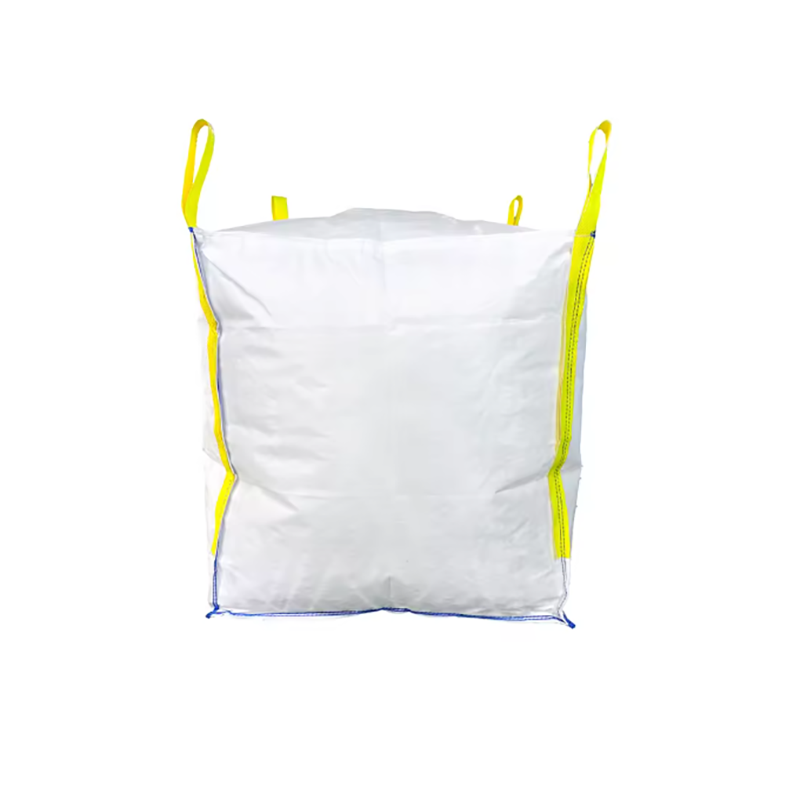
7. What Bag Size and Load Are Required?
The liner dimensions must match the filled shape of the outer bag, not only its flat measurements. Provide:
- FIBC width, length and height;
- filling and discharge-spout dimensions;
- target fill weight and product bulk density;
- safe working load of the outer FIBC;
- coated or uncoated fabric preference;
- pallet, container and stacking requirements.
Film thickness is only one design variable. Seam construction, resin selection, dimensions, attachments and manufacturing consistency also affect performance.
A Practical Selection Matrix
Use this matrix as a starting point—not as a substitute for product testing.
| Application | Practical starting configuration | Details to verify |
| General plastic pellets | Loose or form-fit PE liner | Moisture sensitivity, filling speed, discharge flow |
| Fine mineral powder | Form-fit liner with compatible spouts | Powder leakage, seam design, abrasion |
| Hygroscopic chemical powder | PE or higher-barrier liner | Water-vapor target, chemical compatibility, transport duration |
| Food ingredient | Food-contact-compliant form-fit liner | Documentation, hygiene, traceability, closure |
| Combustible powder | Application-specific static-protective system | FIBC type, liner classification, grounding and process environment |
| Fertilizer or agricultural granules | Loose or tabbed PE liner | Moisture, UV exposure, particle edges, target weight |
Buyer’s RFQ Checklist
Before requesting a quotation, send the supplier the following information:
- Product and industry
- Particle size and bulk density
- Target weight per bag
- Moisture or oxygen-barrier requirement
- Food-contact or regulatory requirement
- Static or combustible-dust conditions
- Filling method and filling-spout dimensions
- Discharge method and outlet dimensions
- Outer FIBC size, construction and safe working load
- Transport route, storage duration and climate
- Required testing and documentation
- Order quantity and printing or labeling needs
Providing these details helps a manufacturer recommend a complete FIBC bulk bag and liner system instead of quoting two components that may not work well together.
Frequently Asked Questions
What is the difference between an FIBC liner and a coated FIBC?
A liner is a separate film layer placed or attached inside the bag. A coated FIBC has a coating applied to the woven polypropylene fabric. Both can reduce powder leakage and moisture entry, but they behave differently during filling and discharge. The correct choice depends on the product and required barrier performance.
Are all FIBC liners made from polyethylene?
No. Polyethylene is widely used because it is flexible and suitable for many dry bulk applications, but multilayer, conductive, static-dissipative, foil and other specialty constructions are also available. Material compatibility and compliance must be checked for the specific product.
Is a thicker liner always better?
No. Thickness can improve mechanical strength in some cases, but it does not by itself guarantee better barrier performance, fit or discharge. Resin, film structure, seam quality, dimensions and handling conditions also matter.
Can an FIBC liner make a bulk bag airtight?
A liner can greatly improve containment, but actual airtightness depends on the film, seams, closures and filling or discharge openings. If a defined leak rate or barrier value is required, include it in the specification and agree on a test method.
Should the liner be reused?
Reuse should never be assumed. It depends on the liner design, product, hygiene requirements, contamination risk and manufacturer’s instructions. Many liners are intended for a single filling cycle.
Final Recommendation
Select the liner as part of the complete packaging and handling process. Start with the product risk, then define barrier performance, filling and discharge geometry, static conditions and compliance requirements. A sample filling and discharge trial is one of the best ways to confirm that the selected FIBC liner performs correctly before a full production order.
For a tailored recommendation, send ZhengYi your product bulk density, target bag weight, filling and discharge method, required barrier properties and destination market. Contact ZhengYi Packaging for a customized FIBC liner quotation.