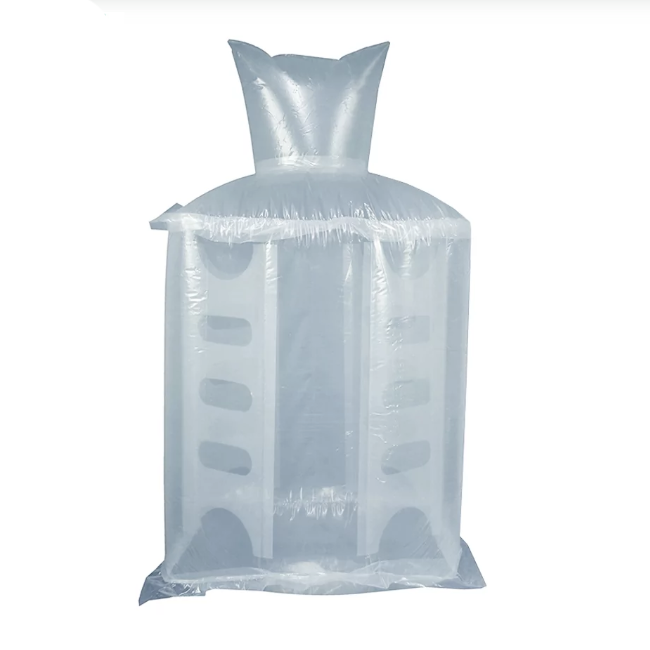
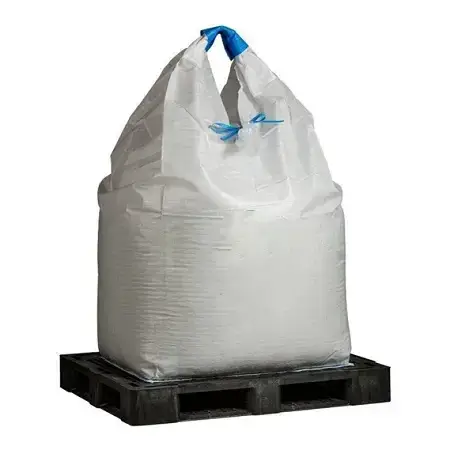
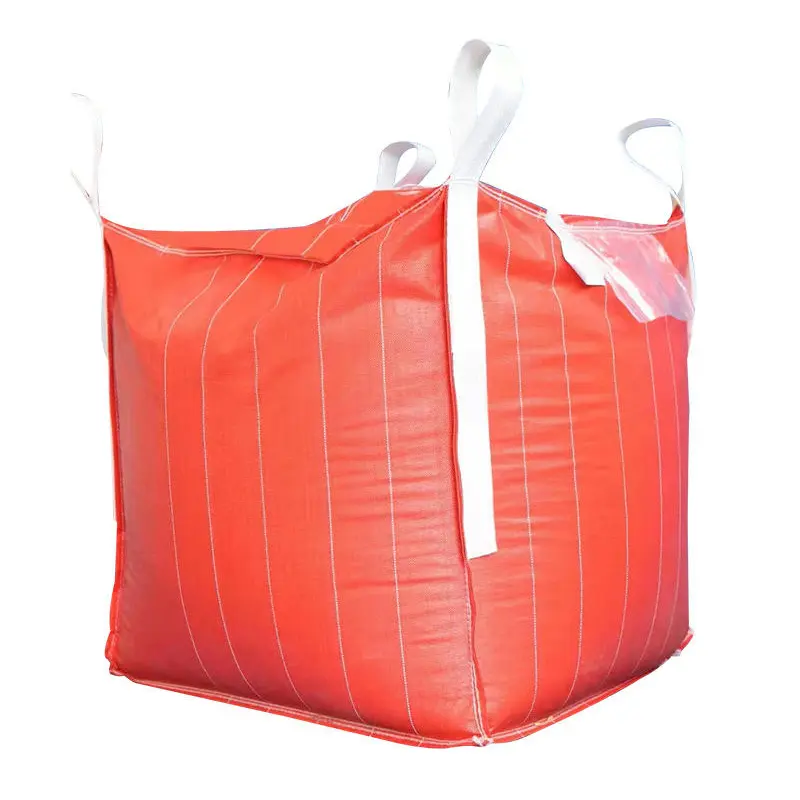
For custom FIBC bulk bags, a useful RFQ must define the material being packed, bulk density, target fill weight, filling equipment, top fill-spout interface, bag dimensions, lifting method, discharge requirement, liner or coating needs, expected UV exposure, labeling, sample approval and acceptance checks before production. “Top fill spout” and “UV resistant” describe only part of the bag. They do not tell a supplier how the bag will fit the filling chute, how much volume is needed, how the filled bag will be lifted, whether dust or moisture must be controlled, or how long the bag may be exposed to sunlight. Those conditions must be frozen before quotations become comparable.
Start With the Material and Filling Process, Not the Bag Drawing
The first design input should describe what goes into the bag and how it is filled. A bag for dense mineral granules and a bag for low-density powder can require very different internal volume even if both are ordered for the same nominal net weight. Flow behavior also affects whether the fill spout needs generous clearance, dust control, a liner interface or a different closure arrangement.
The RFQ should identify the product form—powder, granule, flake, pellet or another bulk material—together with bulk density, target net weight and any known behavior such as dusting, bridging, abrasion, moisture sensitivity or contamination sensitivity. If bulk density changes by grade or season, provide the practical range rather than a single laboratory value.
The filling method should also be stated. Gravity filling, screw conveying, pneumatic conveying and dedicated bulk-bag fillers can impose different demands on spout diameter, spout length, bag suspension and air displacement. FIBCA’s design guidance treats filling method, filling equipment, desired filling rate and fill-spout dimensions as connected design inputs rather than independent fields. The same logic is useful in any custom-bag RFQ.
Buyers comparing the wider product family can review ZhengYi’s FIBC Bulk Bags category, but the final specification should be built from the actual filling process rather than copied from a standard bag listing.
The Top Fill Spout Must Match the Filling Chute
A top fill spout is an interface. Its job is not merely to exist; it must fit the customer’s filling equipment and allow the bag to fill without excessive leakage, dust release or awkward manual adjustment.
Before production, the buyer should freeze:
- fill-spout diameter or lay-flat equivalent;
- spout length;
- how the spout is connected to the filling chute;
- closure method after filling;
- whether a tie, draw cord or another closure is required;
- whether an inner liner must extend through or connect with the spout;
- clearance around the filling head;
- expected filling rate and air-displacement behavior.
Too small an opening can slow filling or interfere with a large chute. Excessive clearance can make dust control more difficult. A spout that is long enough on one filling line may be awkward on another if the bag hanger and filling head are positioned differently.
For an existing plant, the best evidence is usually the actual filling-chute drawing or a dimensioned photograph. For a new filling line, the bag and equipment specifications should be reviewed together. That prevents the supplier from producing a technically correct FIBC that still cannot be mounted properly on the filling station.
Bag Dimensions Should Be Calculated From Product Volume and Handling Constraints
Custom dimensions should not be selected only from a previous bag size. The bag must hold the required material volume while still fitting pallets, racks, containers, filling frames and discharge equipment.
The buyer should calculate required volume from target fill weight and practical bulk density, then apply the project’s fill level and shape constraints. A very low-density product may require a larger bag body than expected. A dense product may reach the target weight before the bag volume is fully used.
Dimensional control also affects logistics. Width and length influence pallet footprint. Filled height can affect container loading, stacking restrictions and clearance below filling equipment. Loop height changes how the bag interfaces with hooks, forklift tines or lifting frames.
A useful RFQ therefore separates:
material volume → bag body dimensions → filled shape → pallet/container/handling limits.
If these variables are not linked, two suppliers may quote different bag dimensions for the same nominal loading weight and both may appear reasonable on paper.
Freeze SWL, Safety Factor and Lifting Arrangement Before Comparing Construction
Safe working load and safety factor are design inputs, not marketing labels. The buyer should state the required filled load, intended trip/use pattern and lifting method so the supplier can propose the appropriate bag construction and testing basis.
The RFQ should define:
- target safe working load;
- required safety factor or applicable project standard;
- single-trip or multi-trip expectation where relevant;
- number and type of lifting loops;
- loop height and handling equipment;
- whether loops must fit forklift tines, hooks or a lifting frame;
- any special lifting or pallet-handling restriction.
These items interact. Increasing the target load without reviewing fabric, seams, lifting loops and test requirements can create an incomplete specification. Changing loop geometry may solve a handling problem but create a clearance issue at the filling station.
The quotation should therefore identify the proposed lifting configuration and any assumptions used for the load rating. A lower price is not comparable if another supplier is quoting a different load or handling basis.
UV Resistance Must Be Defined as an Exposure Condition
“UV resistant” should not be used as an unlimited outdoor-storage promise. Polypropylene FIBC fabrics can use UV-stabilizing additives, but actual outdoor weathering depends on additive formulation, exposure intensity, geographic location, temperature, humidity, bag construction and storage conditions. FIBCA specifically cautions against prolonged outdoor storage and notes that UV exposure can reduce fabric performance over time.
For a custom UV-resistant FIBC, the buyer should define the real exposure scenario:
- whether bags are empty or filled during exposure;
- whether exposure occurs at a loading dock, port, yard or customer site;
- expected cumulative exposure period before use or discharge;
- whether bags will be covered;
- climate or region where exposure is expected;
- required UV test or retained-strength evidence if the project controls it.
This changes the RFQ from a vague request for “UV treated material” into a verifiable requirement. The supplier can then state the fabric stabilization or test evidence included in the offer, while the buyer can decide whether the proposed bag is suitable for the intended storage and logistics cycle.
Even with UV stabilization, good storage practice remains important. UV resistance should reduce a defined risk; it should not be treated as permission for indefinite exposure to sunlight and weather.
Decide Whether Coating or an Inner Liner Is Part of the Barrier Strategy
The outer woven fabric provides the structural bag body, but some materials also need additional control of moisture, dust leakage, contamination or product migration through the weave. That requirement may be addressed through coating, an inner liner or another agreed construction.
The buyer should explain the barrier problem rather than simply writing “with liner.” Questions to freeze include:
- does the product need moisture protection;
- is dust or sift leakage a concern;
- does the material require a clean internal contact surface;
- must the liner connect to the top fill spout;
- is liner removal or attachment important to the filling/discharge process;
- does the product generate static or require another specialized FIBC type.
These choices can affect filling, discharge and bag handling. A liner that does not match the fill-spout geometry may fold or obstruct the inlet. A barrier construction that changes air release can affect filling behavior. For fine powders, the bag seam and liner interface may matter as much as the fabric itself.
The RFQ should therefore require a drawing or construction description showing how the fill spout, liner or coating and bag body work together.
Printing, Labeling and Traceability Belong in the Approved Specification
Custom bulk bags are often ordered with logos, handling instructions, product identification or batch information. These items should not be left to the final packing stage.
Before production, define print sides, print area, number of colors, artwork version, label position, required warning or handling information, barcode or batch-identification needs, and whether the customer requires a specific bag ID or production-lot reference.
Artwork approval should be linked to the same sample revision as the physical bag. Otherwise, the supplier may approve bag dimensions from one sample and printing from another revision, creating unnecessary rework before shipment.
Where traceability is important, the buyer should also define what information must link the finished bag to the production or inspection lot. This can support later receiving inspection and complaint investigation without turning the bag itself into a document archive.
What Should a Pre-Production Sample Actually Prove?
A sample should verify the critical interfaces that are difficult to judge from a quotation. It is not enough to check color and general appearance.
| Sample Check | What the Buyer Should Verify | Why It Matters |
| Bag dimensions | Body dimensions, loop height and spout dimensions match the approved drawing | Confirms fit with filling, pallet and handling equipment |
| Fill-spout fit | Spout mounts correctly on the actual or representative filling chute | Reduces filling delays, leakage and manual adjustment |
| Material volume | Representative product reaches target weight without unacceptable overfill or underfill | Connects bag size to actual bulk density |
| Lifting interface | Loops match the intended forklift, hooks or lifting frame | Confirms handling compatibility |
| Liner/coating | Barrier construction does not obstruct filling and matches the approved interface | Checks the complete bag system rather than one component |
| Closure | Top spout can be closed using the intended method after filling | Prevents a fill-line fit problem from becoming a transport problem |
| Printing/labels | Artwork, position and traceability information match the approved revision | Creates a clear bulk-production reference |
If UV performance is a controlled requirement, sample approval should also define what evidence is reviewed for the fabric. A visual sample alone cannot prove long-term UV behavior.
How Should Buyers Review ZhengYi’s Top Fill Spout UV Resistant FIBC Bag?
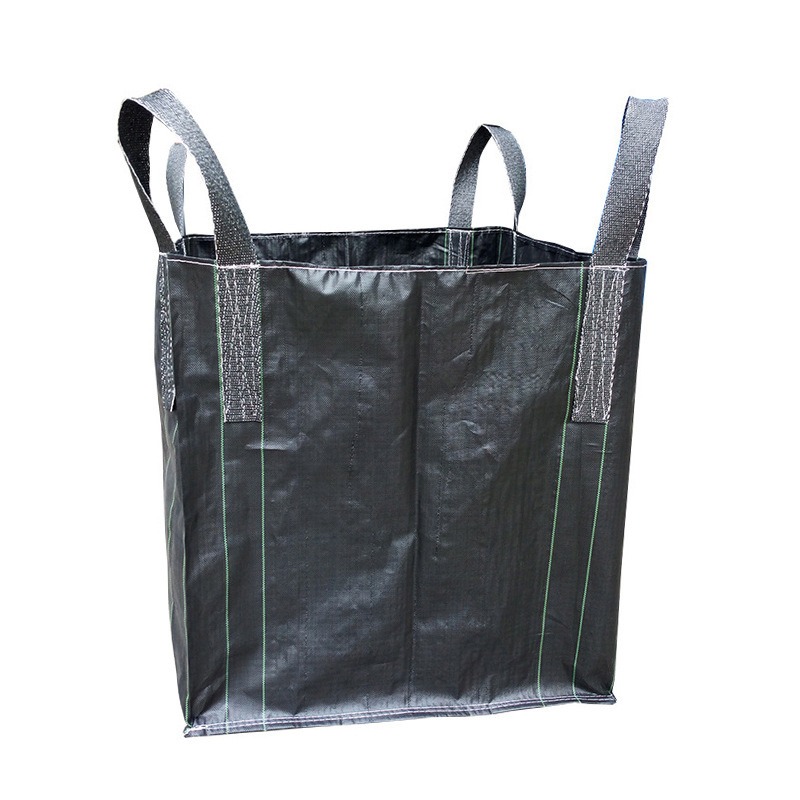
ZhengYi’s Top Fill Spout UV Resistant FIBC Bag page is the correct target product reference for this custom-bag topic. The current client product data confirms that it belongs to the FIBC Bulk Bags family and is offered for B2B projects with specification confirmation and customization support.
The product page identifies the product family, but it cannot automatically define the buyer’s material, fill weight, bulk density, top-spout dimensions, UV exposure, lifting arrangement, liner, printing or acceptance method. Those items remain project-specific.
For quotation comparison, the useful supplier response is therefore not simply “custom available.” It should return the offered dimensions, spout geometry, lifting arrangement, construction scope, UV-related evidence, liner/coating scope, printing scope, sample plan and declared deviations against the RFQ.
What Common RFQ Gaps Make Custom FIBC Quotations Non-Comparable?
Several gaps repeatedly cause suppliers to price different constructions under the same general product name:
- target fill weight is given but bulk density is missing;
- bag dimensions are specified without filling-equipment dimensions;
- top spout is requested but diameter and length are undefined;
- UV resistance is requested without an exposure or test requirement;
- SWL is listed but safety factor or lifting method is not stated;
- liner is requested without describing the barrier problem or liner/spout interface;
- printing is requested before artwork and print sides are frozen;
- sample approval does not identify which dimensions or construction revision it controls;
- alternative materials or constructions are allowed without a deviation list.
The result is a price comparison that looks precise but is technically inconsistent. The fix is to make every quotation reference the same approved RFQ and drawing revision.
Build the Final RFQ Around the Complete Bag System
A complete RFQ for custom Top Fill Spout UV Resistant FIBC Bags should include:
- packed material and application;
- bulk density or practical density range;
- target net fill weight;
- bag body dimensions or dimensional constraints;
- filling method and filling-equipment details;
- top fill-spout diameter and length;
- spout attachment and closure method;
- discharge configuration;
- required SWL and safety factor;
- lifting-loop type, loop height and handling method;
- liner, coating or sift/moisture-control requirement;
- UV exposure scenario and required evidence;
- static-control requirement if the material/process makes it relevant;
- printing, label and traceability requirements;
- sample and pre-production approval scope;
- inspection and acceptance criteria;
- quantity and packaging requirement;
- destination and logistics constraints;
- required declaration of supplier assumptions and deviations.
Ask each supplier to return the RFQ as Confirmed / Proposed Configuration / Deviation / Optional / Buyer Input Required. Once the filling interface, load, UV exposure and approval criteria are fixed, the buyer can use ZhengYi’s contact and RFQ page to submit a specification that is ready for engineering review rather than a generic request for a “custom bulk bag.”