Buyers should select a two-loop FIBC by matching the packed material and actual handling system—not by capacity wording alone. A request for a “half tonne FIBC bulk bag for sale” is incomplete until it defines bulk density, target net mass, bag dimensions, filling method, discharge method, liner or coating, lifting equipment, storage, transport, environmental exposure and acceptance evidence. The same nominal payload can require different bag volumes and structures because a light agricultural product occupies more space than a dense mineral. Likewise, a two-loop design that fits one lifting hook or forklift arrangement may not fit another. The correct path is material → fill volume → bag construction → lifting interface → logistics → verification, followed by a supplier response that records every confirmed choice and deviation.
Why Is Nominal Capacity Not Enough to Select the Bag?
Payload describes only one part of the duty. It does not define the volume the material occupies, the way the bag is filled, the loads introduced during lifting or the conditions during storage and transport. A buyer asking for a half-tonne bag may receive quotations based on different dimensions, fabrics, loop arrangements and closures. Those quotations are not technically comparable even if every supplier repeats the same nominal mass.
Bulk density connects target mass to required volume. Flow behavior then affects how effectively that volume is used. Fine powder may entrain air and settle after filling; irregular material may bridge; free-flowing granules can load the bottom and seams differently during handling. The buyer should provide representative material data and the intended fill level rather than expect the bag supplier to infer them from a commodity name.
Start With the Full Material and Logistics Duty
A practical application statement follows the bag from empty delivery to final discharge. It identifies the product, bulk density range, target net mass, filling head or chute, required dust control, lifting device, internal movement, warehouse conditions, vehicle or container arrangement, unloading method and disposal or reuse policy.
Two projects carrying the same mass can lead to different decisions. A dry fertilizer moved short distances under cover may prioritize fast filling and a simple discharge route. A moisture-sensitive powder shipped overseas may need a defined liner, closure and barrier strategy. Construction material exposed outdoors may introduce UV, rain, abrasion and rough handling considerations. These differences should change the quotation configuration, not remain in an email after the price has already been calculated.
The two-loop big bag category is a useful discovery point for available constructions. Selection still requires the buyer to translate its actual duty into a bag drawing and acceptance plan.
Which Conditions Should Drive the Configuration?
| Operating condition | Buyer must define | Configuration decision | Supplier evidence |
| Material | Bulk density, particle form, flow, moisture and hazards | Volume, fabric, coating/liner and closure review | Application statement and offered construction |
| Target fill | Normal and maximum net mass | Bag size and rated duty | Drawing and product identification |
| Filling | Chute/head size, dust control and fill rate | Open top, skirt or spout geometry | Top dimensions and sample fit |
| Discharge | Single dump, controlled flow or no bottom discharge | Flat bottom or discharge-spout arrangement | Bottom drawing and closure detail |
| Lifting | Fork, hook or lifting-frame geometry | Loop dimensions, orientation and access | Handling drawing and trial |
| Storage/transport | Stacking, pallet, container and restraint method | Filled shape, dimensions and packing | Logistics review |
| Environment | Indoor/outdoor time, moisture, UV and temperature | Protection and shelf-life review | Supplier limitation statement |
| Acceptance | Applicable standard, test and documentation | Inspection and release plan | Agreed records |
How Do Bulk Density and Bag Dimensions Work Together?
Bag dimensions should be derived from usable volume and the real filling process. Dividing target mass by bulk density provides a starting estimate, but it is not the final bag specification. Buyers also need to consider settling, deaeration, headspace, liner fit, closure space and how the filled bag changes shape. A calculation that ignores these effects may produce a bag that is technically large enough on paper yet difficult to close, unstable in transport or poorly matched to the filling station.
The supplier should therefore return proposed external dimensions, relevant opening dimensions and the assumptions used. When a new material or filling line is involved, a sample fill or controlled trial gives stronger evidence than a nominal volume statement alone.
How Should Buyers Match the Two Loops to Handling Equipment?
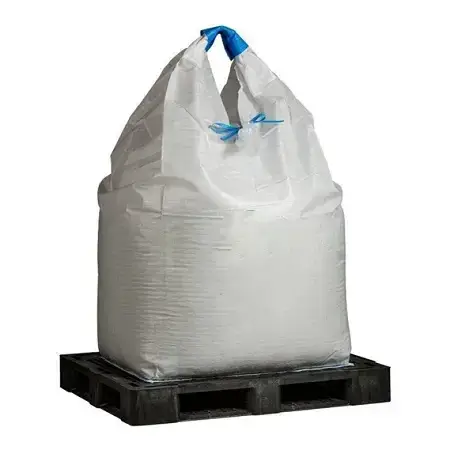
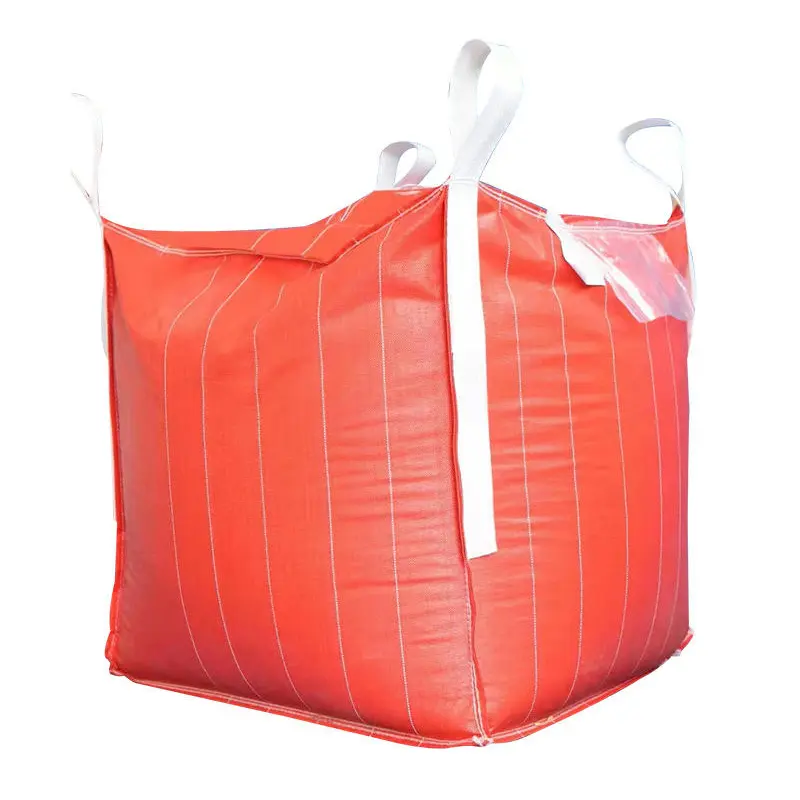
“Two loop” identifies a general lifting concept, not a complete mechanical interface. The buyer should provide fork width and spacing, hook or lifting-bar geometry, available headroom, approach direction, required loop height and any automatic handling constraints. The lifted bag must be evaluated as a system comprising the bag body, loops, lifting device, filled material and operating procedure.
Loop access can become difficult when a filled bag sits close to neighboring bags, under a low filling frame or inside a restricted vehicle. A loop that is tall enough for one operation can affect overall transport height. A shorter loop may improve packing but reduce access. These trade-offs belong in the drawing review before production.
Application boundary: a nominal load claim does not confirm compatibility with a buyer’s forks, hook, lifting frame or work procedure. Physical fit and the applicable handling test must be reviewed separately.
Which Top and Bottom Construction Fits the Process?
The top should match the filling equipment and containment objective. An open-top arrangement may be efficient for coarse, non-dusty material under controlled filling, while a skirt or spout can support different containment and connection needs. The correct choice depends on chute dimensions, material flow, dust collection, closure and operator procedure.
The bottom is a separate decision. A flat bottom may fit a single-use cut-open process or applications where controlled discharge is not required. A discharge spout can support repeated, directed emptying but introduces geometry, closure and access requirements. Buyers should state the receiving equipment and required discharge rate or control approach. A generic “bottom spout” description is not enough for a compatible interface.
When Are a Liner, Coating or Sift-Control Measures Needed?
The packed material determines whether the woven body alone is suitable. Moisture sensitivity, particle size, dust, product-contact requirements and contamination risk may point to a coating, liner, seam treatment or combined solution. These features solve different problems and should not be treated as interchangeable.
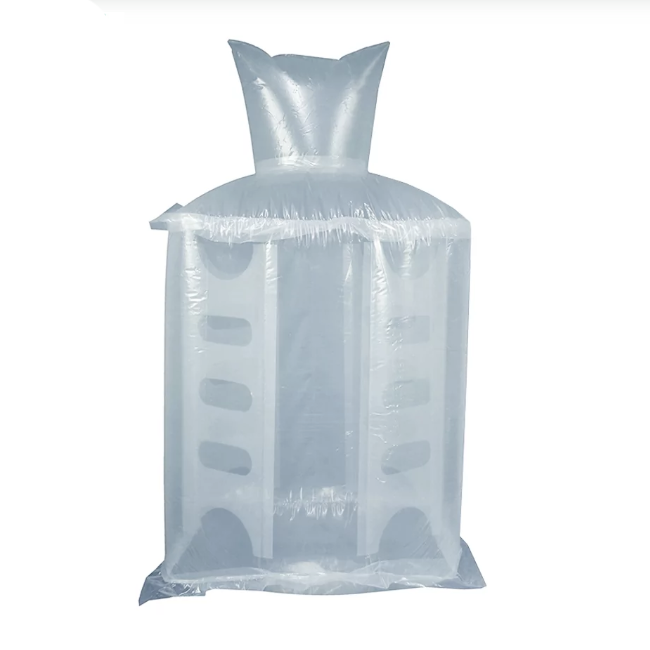
If a liner is needed, the RFQ should define material, dimensions, attachment, filling connection, discharge connection and how the liner behaves during emptying. Poorly matched liner geometry can obstruct flow, fold into the outlet or complicate closing. The supplier should confirm the complete bag-and-liner configuration rather than quote the liner as an isolated accessory.
How Do Storage and Transport Change the Decision?
Bag selection should account for the filled package footprint, height, stability and protection throughout logistics. Container loading may impose a different dimensional target from warehouse handling. Palletized transport, floor storage and project-specific stacking each create different constraints. The buyer should not assume stackability; it must be assessed from the filled material, bag design, handling method and applicable safety rules.
Outdoor exposure also needs duration and conditions. “UV resistant” is incomplete without an exposure scenario and agreed material or performance basis. Moisture protection depends on both construction and closure. The supplier should identify storage limitations, and the buyer should preserve those conditions after delivery.
How Should Buyers Evaluate the 2 Loop PP Woven FIBC Offer?
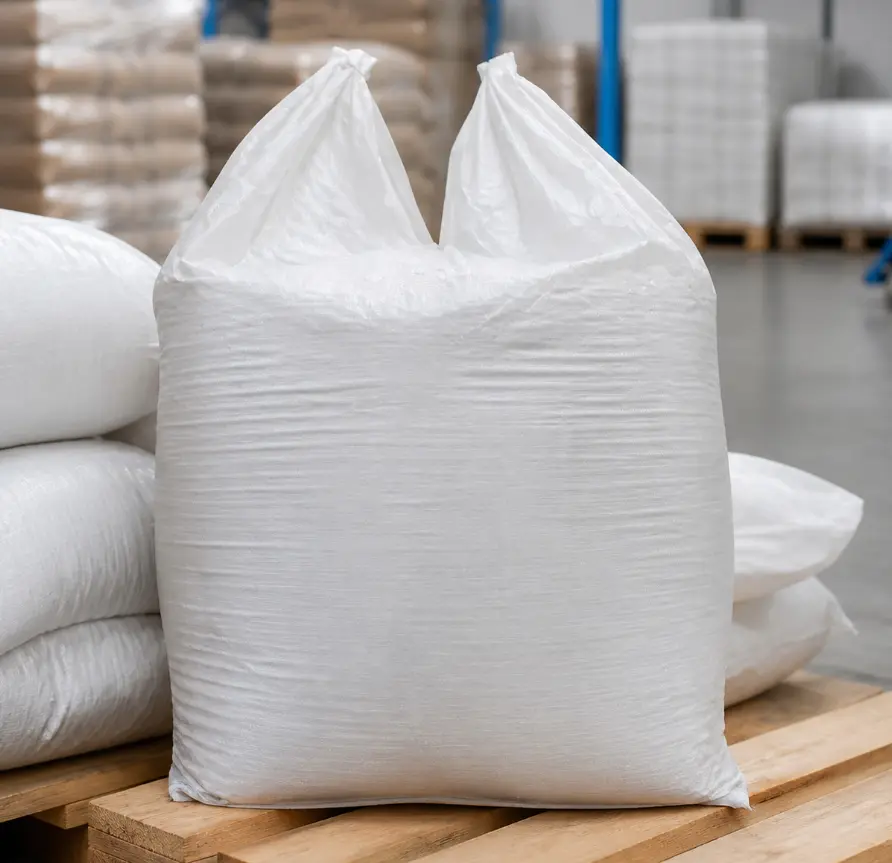
ZhengYi’s 2 Loop PP Woven FIBC for bulk materials provides a distinct product reference for application review. It does not remove the need to confirm the offered version. The quotation should state the exact dimensions, target duty, top and bottom construction, two-loop interface, fabric/coating/liner scope, printing, packing and required evidence.
Buyers searching for a half tonne FIBC bulk bag for sale should use “half tonne” as an initial payload target, not as the entire technical specification. The supplier should return a configuration matched to the material and handling route and identify where buyer input or a sample trial is still required.
What Evidence Should Support Sample and Production Approval?
Sample approval should verify more than appearance. The trial should check filling connection, achievable fill mass and shape, closure, loop access, lifting interface, discharge behavior and compatibility with storage or transport dimensions. Results should be recorded against the approved drawing revision.
Production approval then needs defined incoming, in-process and finished-bag checks appropriate to the project. Buyers should specify which dimensions, construction details, identification and test records accompany the shipment. If a deviation affects material, loop, seam, liner, dimensions or another controlled feature, it should be reviewed before shipment rather than discovered during receiving inspection.
What Common Selection Mistakes Create Procurement Risk?
- Buying by payload phrase: target mass is stated, but bulk density and volume are absent.
- Ignoring the lifting interface: the bag arrives before fork, hook or headroom compatibility is checked.
- Leaving closures undefined: the quoted top or bottom cannot connect to the buyer’s equipment.
- Assuming liner performance: material, attachment and discharge behavior are not frozen.
- Comparing unlike quotations: suppliers include different fabrics, accessories, packing and evidence.
- Approving appearance only: no representative filling and handling trial is completed.
What Should a Two-Loop FIBC RFQ Include?
- Material name, bulk-density range and relevant flow characteristics.
- Normal and maximum net fill mass.
- Required usable volume and dimensional constraints.
- Filling-equipment interface and top construction.
- Discharge method and bottom construction.
- Fabric, coating, liner and seam-control requirements.
- Fork, hook or lifting-frame geometry.
- Loop arrangement, access and headroom limits.
- Storage, stacking, pallet and container conditions.
- Indoor/outdoor exposure and moisture conditions.
- Required standard, duty classification and testing.
- Drawing, sample approval and production evidence.
- Printing, labels, packing and traceability.
- Quantity, destination and delivery schedule.
Frequently Asked Questions
Is every half-tonne FIBC the same size?
No. Required volume depends mainly on the material’s bulk density, settling behavior, filling method and needed headspace. Dimensions must also fit the buyer’s equipment and logistics.
Can a two-loop bag be lifted with any forklift?
No. Fork dimensions, spacing, approach, loop access and working clearance must match. The handling procedure and applicable safety requirements also need review.
Does a liner automatically make an FIBC moisture-proof?
No. Barrier performance depends on liner material, seams or seals, closures, attachment and real handling. The required protection and acceptance method should be specified.
Should buyers approve a bag from a drawing alone?
A drawing is essential, but a representative fill-and-handling trial may be needed for a new material, configuration or equipment interface. The approval scope should be stated in the RFQ.
Send the completed duty description, equipment dimensions, drawing requirements and evidence checklist through ZhengYi’s bulk bag inquiry form. Ask the supplier to return every line as Confirmed, Deviation, Alternative or Buyer Input Required so the final quotation represents the same application that production and receiving teams will evaluate.