FIBC bulk bag handling should be specified as one continuous process from filling to final discharge. Buyers need to define the packed material, target load, filling equipment, top-spout interface, lifting arrangement, internal movement, storage and transport conditions, bottom-discharge interface and required bag construction before comparing suppliers.
For a top-spout, bottom-spout FIBC with four lifting loops, the bag is only one part of the handling system. The filling spout must fit the filling equipment, the loop arrangement must fit the forklift or lifting system, and the discharge spout must fit the receiving process.
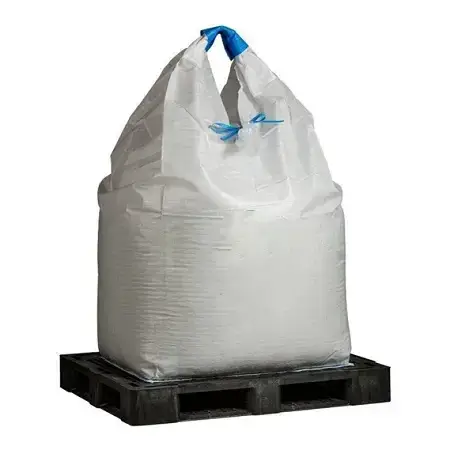
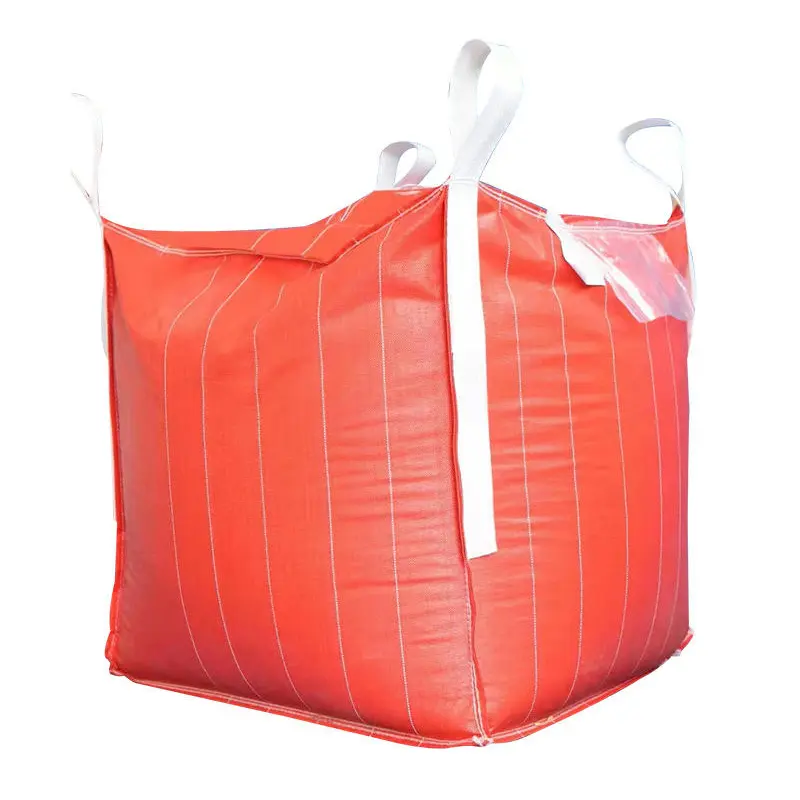
ZhengYi’s Top Spout Bottom Spout Jumbo Bag with 4-Point Lift Handling is available in 500–3000 kg loading configurations, with common 1000, 1500 and 2000 kg options, filling and discharge spouts, several four-loop arrangements, coated or uncoated PP fabric, optional PE liner and optional UV, sift-proof and dust-proof treatments.
FIBC Handling Is a Process, Not a Single Lifting Operation
The search term “FIBC bulk bags handling” is often interpreted as a lifting question.
Lifting is important, but it is only one stage.
A complete handling chain is:
Material
↓
Filling
↓
Bag stabilization
↓
Lifting
↓
Internal movement
↓
Storage / transport
↓
Positioning
↓
Discharge
If the supplier receives information about only one step, the resulting bag may fit one operation and create problems at another.
For example:
- a top spout may not fit the filling chute;
- lifting loops may not match the handling equipment;
- the filled bag dimensions may not suit the logistics plan;
- a discharge spout may not fit the receiving hopper;
- a liner may interfere with filling or discharge if its construction is not coordinated with the outer bag.
For this reason, a handling specification should start with the entire process.
Buyers can first review the FIBC Bulk Bags category and then define the exact process conditions that the final bag must meet.
Step 1: Define the Material Before Designing the Handling System
The handling system begins with what goes inside the bag.
The RFQ should identify:
- material name;
- powder, granule or other product form;
- actual bulk density;
- target net weight;
- flow behavior if known;
- dust behavior if relevant;
- moisture or contamination requirements;
- any project-specific packaging requirements.
The supplier then has a basis for evaluating volume, fabric, top and bottom configuration, liner and handling requirements.
Two projects with the same target net weight may still require different bag constructions because the materials occupy different volumes or behave differently during filling and discharge.
The handling specification should therefore begin:
Material → Load → Volume
not:
Catalogue bag → Try to make it fit the process
Step 2: Match the Top Spout to the Filling Equipment
The target ZhengYi product uses a filling spout / top-spout configuration.
That does not mean one standard spout will match every filling system.
Before production, the buyer should provide or confirm:
- filling-head outside diameter;
- required spout diameter;
- usable spout length;
- filling-head engagement;
- closure method;
- filling rate if relevant;
- air or dust-management requirement;
- liner interface if a liner is used.
The filling spout is an equipment connection.
Its purpose is not simply to “close the top of the bag.” It must physically and operationally match the filling station.
If the interface is poorly defined, buyers can experience problems even when the bag’s nominal capacity and material strength are correct.
A representative sample should therefore be checked against the filling process before the bulk specification is frozen when the project depends on a defined filling interface.
Step 3: Define the Load Before Selecting the Lifting Configuration
The target product data lists:
- loading capacity: 500–3000 kg or customized;
- common capacities: 1000 kg, 1500 kg and 2000 kg;
- safety factor: 5:1 or customized.
These figures describe available product configurations. They do not mean every construction is automatically approved for every payload.
The RFQ should state the intended net load and ask the supplier to confirm the final SWL and relevant safety factor for the proposed bag.
Buyers should also avoid a common shortcut:
“Our product weighs 1,000 kg, so please quote any 1-ton FIBC.”
Payload does not define:
- bag volume;
- bag dimensions;
- loop geometry;
- filling structure;
- discharge structure;
- fabric treatment;
- liner;
- logistics conditions.
Those still need to be specified.
For more background on the relationship between SWL and safety factor, buyers can refer to ZhengYi’s existing FIBC Safety Factor Guide.
Step 4: Match the Four-Point Lifting Arrangement to the Equipment
The target product supports:
- four lifting loops;
- corner-loop configurations;
- cross-corner-loop configurations.
A buyer should therefore avoid using “4 loops” as the complete lifting specification.
Instead, define the actual lifting system.
Questions include:
- Will the bag be handled by forklift?
- Is a crane or other lifting system involved?
- How will the operator access the loops?
- What fork spacing or lifting-point arrangement is used?
- Are the loops required to remain upright or accessible?
- Does the filling station support the bag by its loops during filling?
- How will the bag be positioned above the discharge station?
The lifting interface should be considered before the loop configuration is finalized.
A bag that is technically liftable but awkward to connect to the customer’s equipment can still create an inefficient handling process.
Step 5: Consider Filled-Bag Shape During Internal Movement
After lifting, the filled bag has to move through the plant or warehouse.
This makes filled dimensions and stability part of the handling specification.
Buyers should define:
- aisle and equipment clearances;
- pallet requirements, if any;
- warehouse layout;
- movement between production and storage;
- container or truck loading method;
- restrictions on filled bag dimensions.
This is also where bag construction can become important.
If cube efficiency or filled shape is a major objective, a baffled FIBC may deserve separate evaluation rather than assuming a standard bag is sufficient.
ZhengYi has already covered this topic separately in its comparison of baffle and conventional FIBC structures, so a handling RFQ does not need to treat every bag style as interchangeable.
The correct construction depends on the complete logistics requirement.
Step 6: Specify Coated or Uncoated Fabric From the Application
The target Top Spout Bottom Spout FIBC is available with coated or uncoated woven PP fabric.
The choice should be driven by the packed material and process requirement.
A buyer should provide information such as:
- material form;
- dust behavior;
- required containment;
- ventilation requirements, if any;
- storage conditions;
- moisture-protection requirement.
The supplier can then recommend the relevant construction.
The important point is that:
Coated does not automatically mean better.
Nor does:
Uncoated automatically mean more economical for every application.
Each changes how the bag behaves as part of the packaging system.
The RFQ should state the operating requirement rather than asking suppliers to choose solely on price.
Step 7: Decide Whether a PE Liner Is Required
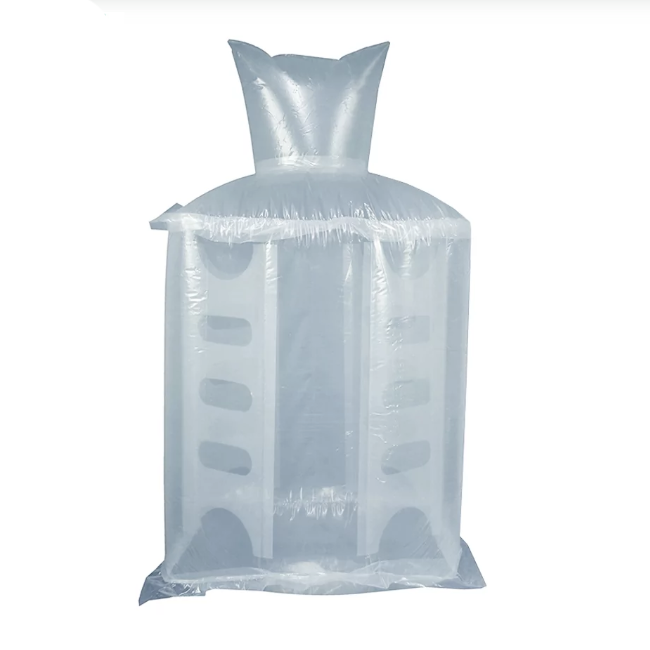
The target product also offers an optional PE liner.
A liner may be relevant when the project requires an additional barrier between the packed material and outer woven fabric.
But a liner adds another interface to the handling process.
The buyer should confirm:
- liner requirement;
- liner material;
- liner construction;
- fixation;
- filling-spout connection;
- discharge-spout connection.
A liner that is poorly matched to the outer bag can twist, move or interfere with product flow.
For that reason:
outer FIBC + liner + filling interface + discharge interface
should be treated as one system.
Step 8: Plan Storage and Transport Before Finalizing the Bag
Handling does not end when a forklift puts the bag into a warehouse.
The next stages may include:
- temporary storage;
- pallet movement;
- container loading;
- road transport;
- sea transport;
- outdoor exposure;
- destination unloading.
The RFQ should therefore tell the supplier:
- where the filled bag will be stored;
- expected exposure conditions;
- how it will be transported;
- how it will be loaded into the transport unit;
- how it will be handled at destination.
The target product offers optional UV-resistant treatment.
That option should be selected from the real exposure requirement, not added automatically to every project specification.
Likewise, sift-proof or dust-proof treatment should be tied to the behavior and containment needs of the packed product.
Step 9: Treat the Bottom Spout as a Process Interface
The target product uses a bottom discharge spout for controlled unloading.
As with the top filling spout, the bottom outlet must match the receiving process.
The buyer should identify:
- receiving hopper or equipment;
- required discharge-spout diameter;
- required spout length;
- closure system;
- desired flow-control method;
- product flow characteristics;
- liner discharge construction, if applicable;
- residual-material considerations.
A common mistake is to specify a discharge spout without checking the equipment beneath the FIBC.
The bag may be correctly manufactured but still create a poor fit with the plant.
The correct sequence is:
Receiving equipment → Required discharge interface → Bag bottom design
rather than choosing a standard outlet first.
FIBC Handling Specification Matrix
A procurement team can use the following matrix before requesting quotations.
| Handling Stage |
Buyer Should Define |
Supplier Should Confirm |
| Material |
Product + bulk density |
Compatibility |
| Load |
Target net weight |
SWL |
| Volume |
Required filled volume |
Bag dimensions |
| Filling |
Filling-head interface |
Top-spout dimensions |
| Containment |
Dust/moisture requirement |
Fabric/treatment |
| Liner |
Barrier requirement |
Liner configuration |
| Lift |
Forklift/crane arrangement |
Loop style |
| Internal movement |
Clearance/logistics |
Filled dimensions |
| Storage |
Environment/exposure |
UV/treatment requirement |
| Transport |
Pallet/container method |
Bag configuration |
| Discharge |
Receiving equipment |
Bottom-spout design |
| Documentation |
Project requirement |
Available records |
Once these fields are aligned, quotations become substantially easier to compare.
How the ZhengYi 4-Point Handling Product Fits the Process
The current product configuration provides several options that map directly to the handling chain.
| Handling Requirement |
Available Product Evidence |
| Bulk payload |
500–3000 kg or customized |
| Common load options |
1000 / 1500 / 2000 kg |
| Safety factor |
5:1 or customized |
| Filling |
Top filling spout |
| Controlled unloading |
Bottom discharge spout |
| Lifting |
4 lifting loops |
| Loop configuration |
Corner or cross-corner |
| Fabric |
Coated or uncoated PP |
| Extra barrier |
Optional PE liner |
| Environmental exposure |
Optional UV resistance |
| Fine-material containment |
Optional sift-proof / dust-proof treatment |
| Branding |
Plain or custom printing |
The full Top Spout Bottom Spout Jumbo Bag with 4-Point Lift Handling specification can therefore be used as a starting configuration.
It should still be finalized against the buyer’s material and handling process.
What a Complete Handling RFQ Should Include
Instead of sending:
“Please quote 1,000 pcs FIBC bulk bags.”
use a structured RFQ.
Material Data
- material name;
- product form;
- actual bulk density;
- target net weight;
- relevant flow/dust characteristics.
Filling Data
- filling equipment;
- filling-head diameter;
- top-spout requirement;
- required closure;
- liner connection if applicable.
FIBC Data
- required bag dimensions;
- SWL;
- safety factor;
- coated/uncoated fabric;
- liner;
- treatments;
- printing.
Handling Data
- lifting equipment;
- preferred loop arrangement;
- forklift/fork dimensions where relevant;
- pallet requirement;
- warehouse movement.
Discharge Data
- receiving equipment;
- required discharge-spout dimensions;
- closure;
- flow-control requirement;
- liner-discharge interface.
Logistics and Commercial Data
- storage environment;
- transport method;
- UV exposure if relevant;
- order quantity;
- destination;
- required documents;
- sample approval requirement.
This allows the supplier to quote an actual handling solution rather than only an empty bag.
The Main Procurement Principle
A good FIBC handling project should follow this sequence:
Material
→
Payload and Volume
→
Filling Interface
→
Bag Construction
→
Lifting Interface
→
Internal Logistics
→
Storage and Transport
→
Discharge Interface
→
Verification
If buyers jump directly from:
“We need a 1-ton bag”
to:
“What is your price?”
different suppliers can easily quote technically different products under the same commercial description.
That makes price comparison misleading.
Conclusion
FIBC bulk bag handling is not just a question of how to lift a jumbo bag.
It is a complete process connecting the packed material, filling equipment, bag construction, lifting arrangement, warehouse movement, transport and discharge equipment.
For projects requiring top filling, four-point lifting and controlled bottom discharge, ZhengYi’s available configuration provides filling-spout and discharge-spout options, 500–3000 kg loading configurations, several four-loop arrangements, coated or uncoated PP fabric, optional PE liner and optional UV, sift-proof and dust-proof treatments.
The correct configuration should be confirmed from the operating process rather than selected from nominal capacity alone.
Buyers can contact ZhengYi FIBCs with the packed material, bulk density, target load, filling equipment, lifting system, discharge equipment, order quantity and destination for project-specific configuration confirmation.
FAQ
What information is needed to specify FIBC bulk bag handling?
At minimum, define the packed material, bulk density, target net weight, filling equipment, lifting method, storage and transport conditions, discharge equipment and required bag construction.
Is four-point lifting the same for every FIBC?
No. Four lifting loops can use different arrangements. The loop geometry and configuration should be matched to the actual forklift, crane or handling system.
Why does the top-spout size matter?
The top spout is the interface between the FIBC and filling equipment. Its diameter, length and closure need to fit the actual filling head and process.
When is a bottom discharge spout useful?
A bottom spout is suitable when the process requires controlled emptying into downstream equipment. Its dimensions and closure should be specified from the receiving process.
Can a buyer select the bag from load capacity alone?
No. Payload is only one input. Bag volume, dimensions, fabric, liner, top and bottom construction, lifting arrangement and logistics conditions also need to be defined.